

Rozie Kelly
Rozie Kelly is a novelist based in West Yorkshire. After reading English Literature and Creative Writing she moved to Hebden Bridge, where she works for the Arvon Foundation, hosting creative writing courses. She was shortlisted for the PFD Queer Fiction Prize 2023 and was one of the eight participants in the inaugural Prototype Development Programme 2024. She won the 2024 NorthBound Book Award for Kingfisher, her debut novel.
Rep: Charlotte Seymour, Johnson and Alcock.
Instagram: @rozeamee
Author photo credit: Harvey Williams-Fairley.
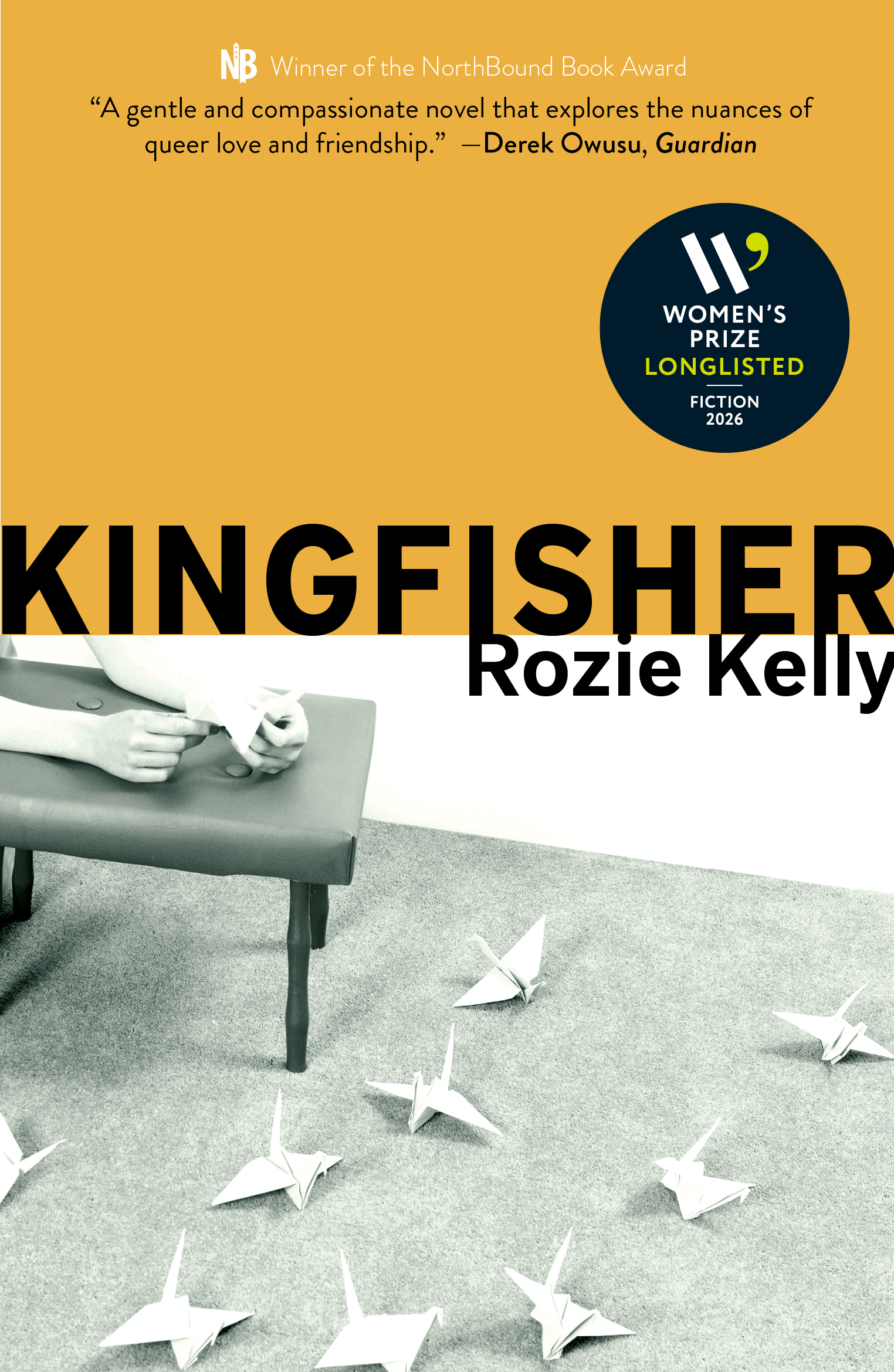
Kingfisher
by Rozie Kelly


LONGLISTED FOR THE 2026 WOMEN’S PRIZE FOR FICTION
“A gentle and compassionate novel that explores the nuances of queer love and friendship.” The Guardian, Derek Owusu
When a creative writing academic becomes infatuated with his colleague – the poet – it is not long before it begins to threaten his relationship with his partner, Michael. Michael is beautiful. Michael is safe. But the poet is everything he isn’t; she has everything he wants.
While he writes about steel and sex, she dreams about the movements of swallows. While he tends to his budding career, she writes from her big, white house in the woods. As he slips between his old life and this new one, his fixation grows into something more powerful. The poet, his Kingfisher, is his sole focus. He is hypnotised.
But when simultaneous illnesses threaten to destroy the precarious reality he clings to, he’s forced to question what he can and cannot take from someone. This is a novel about grief, power and desire – and the tangles in between that make up a life.
REVIEWS OF Kingfisher
“I knew from the first page that I was reading something special. Every moment was so delicate that I read as slowly as I could but still enjoyed that rare impulse, once finished, of going back to the start and reading it all over again.” Derek Owusu, award-winning writer and poet
"A best in class example of the multitudes queerness contain … heart-shattering … stunning all around." Georgios Chiotis
“With lyrical, observational style prose that drew me in from the first page, this is a short debut that packs a punch… Rozie Kelly is a stunning new voice in fiction.” The Debut Digest
“Kelly may be writing in the same lane as the likes of Rooney and Levy, but she is a confident voice in her own right, and handles grief, power, and desire with deftness. The attractive prose typical of literary fiction, and indeed seen in this novel, often creates more vibe than substance, but not in the case of Kingfisher, a story that stings with realism.” nb. magazine
“A tenderly written meditation on art, love and life that’s as much about the search for self as for connection.” Marie Claire, editor’s pick
"Kelly excels" The Telegraph
“… Bound for success” The Yorkshire Post
“With sharp, witty dialogue and richly developed characters, this book captivates from the very first page. … A compelling exploration of human nature with an unforgettable voice.” Northern Life Magazine (The Best Northern Books to Read in Spring 2025)
“Kelly observes relationships and their intricate power dynamics with precision and grace. This sublime novel is skilful in the extreme, balancing brutality and care with the deftest touch." The Bookseller, Ten Titles Not To Miss In April
“An unmissable debut, a beautifully crafted story of relationship dynamics and how we reconstruct and find ourselves within them. Kelly writes about love, grief and longing in a beautifully lyrical prose that's both devastating and darkly funny. I can't wait to see what she does next.” Ania Card, author of Above Us the Sea

Marchelle Farrell
Marchelle Farrell has trained and worked as a consultant psychiatrist and psychotherapist, and is deeply curious about the relationships between our external landscapes and internal ones. Her debut memoir, Uprooting, won the 2021 Nan Shepherd Prize for nature writing, and was shortlisted for the Wainwright Prize for Nature Writing in 2024.
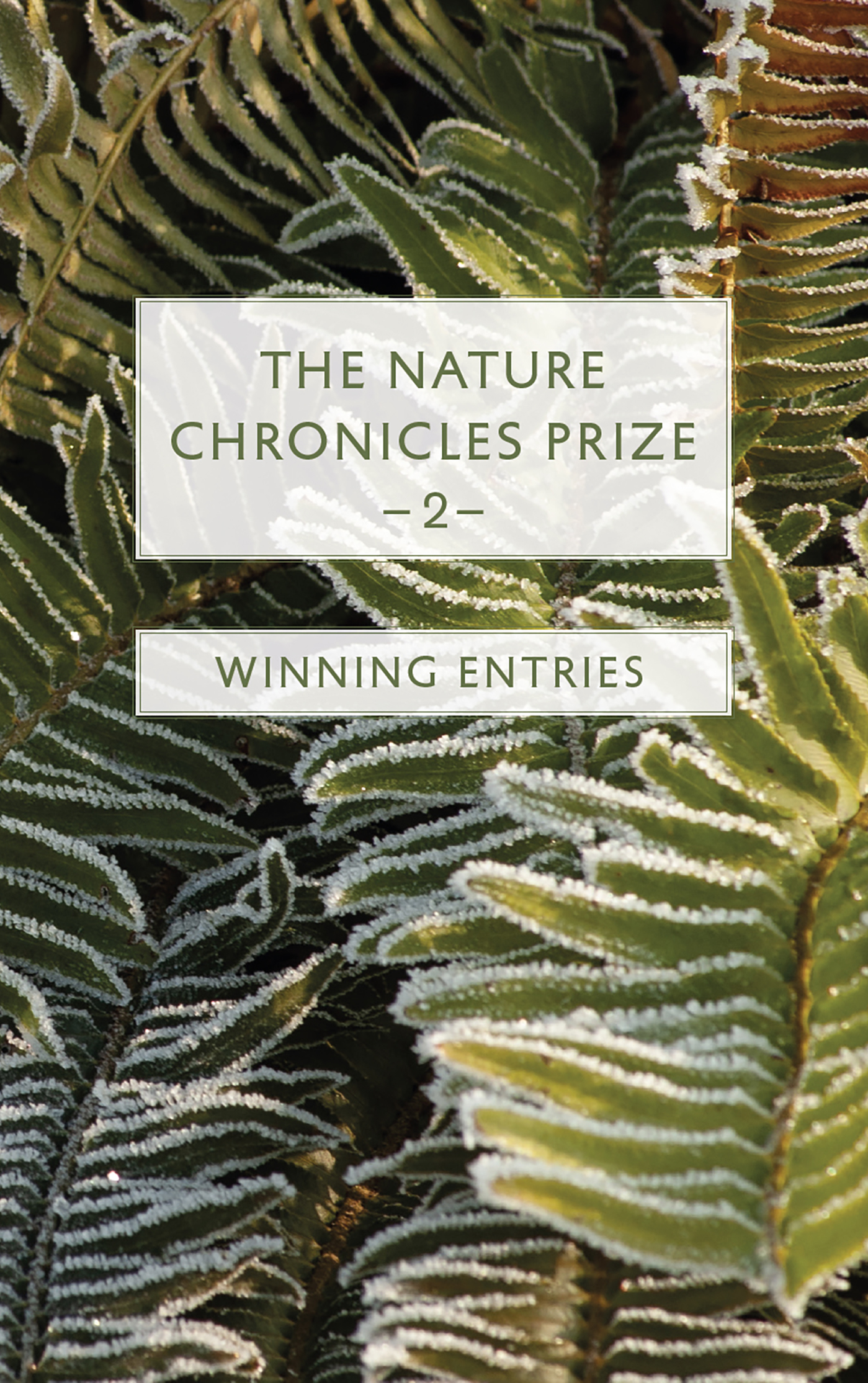
The best of contemporary nature writing from the winners of the second international Nature Chronicles Prize.
Founded in 2020 to mark the global pandemic and serve those who witnessed it, The Nature Chronicles Prize is an international, English-language, biennial literary award for unique, essay-length non-fiction that responds to the time we are in and the natural world as it is. The prize is also a memorial to Prudence Scott, a lifelong nature diarist who died in 2019. Contained within this volume are the outstanding shortlisted entries for the second iteration of the prize.
These winning works address the feelings of responsibility, anxiety and hope that come with living at this time on this planet, and celebrate the species we share the earth with – from insects to blue whales. Together, the essays represent the freshest, most exciting contemporary nature writing by emerging and established authors.
Written by Matt Sowerby, the winning essay is ‘Hope Is the Thing With Flippers’. The shortlisted authors also included in this anthology are: Neillah Arboine, Meg Bertera-Berwick, Emma Harding, David Higgins and Neha Sinha.
The anthology is introduced by nature writer Marchelle Farrell, winner of the 2021 Nan Shepherd prize for nature writing.
Graeme Macrae Burnet
Graeme Macrae Burnet was born in Kilmarnock and now lives in Glasgow. He is the author of five novels and a novella. His novels are His Bloody Project, Case Study and the French-set Gorski trilogy, the final part of which A Case of Matricide was published in October 2024. His novella Benbecula was published in October 2025 in Polygon’s Darklands series. The Guardian called it ‘intense and utterly compelling.’
His Bloody Project was shortlisted for the 2016 Booker Prize, the LA Times Mystery Book of the Year and the European Crime Fiction prize and won the Saltire Prize for Fiction. It was variously described as ‘astonishing’, ‘fiendishly readable’ and ‘spellbinding’. Case Study was longlisted for the 2022 Booker Prize, shortlisted for the Gordon Burn Prize and included in the New York Times 100 Notable Books of 2022. Hannah Kent called it ‘a novel of mind-bending brilliance.’ The Financial Times declared A Case of Matricide ‘a triumph’. It won the Australian Crime Writers Best International Crime award.
Graeme’s work has been translated into more than twenty languages, and he has appeared at festivals all over the world.
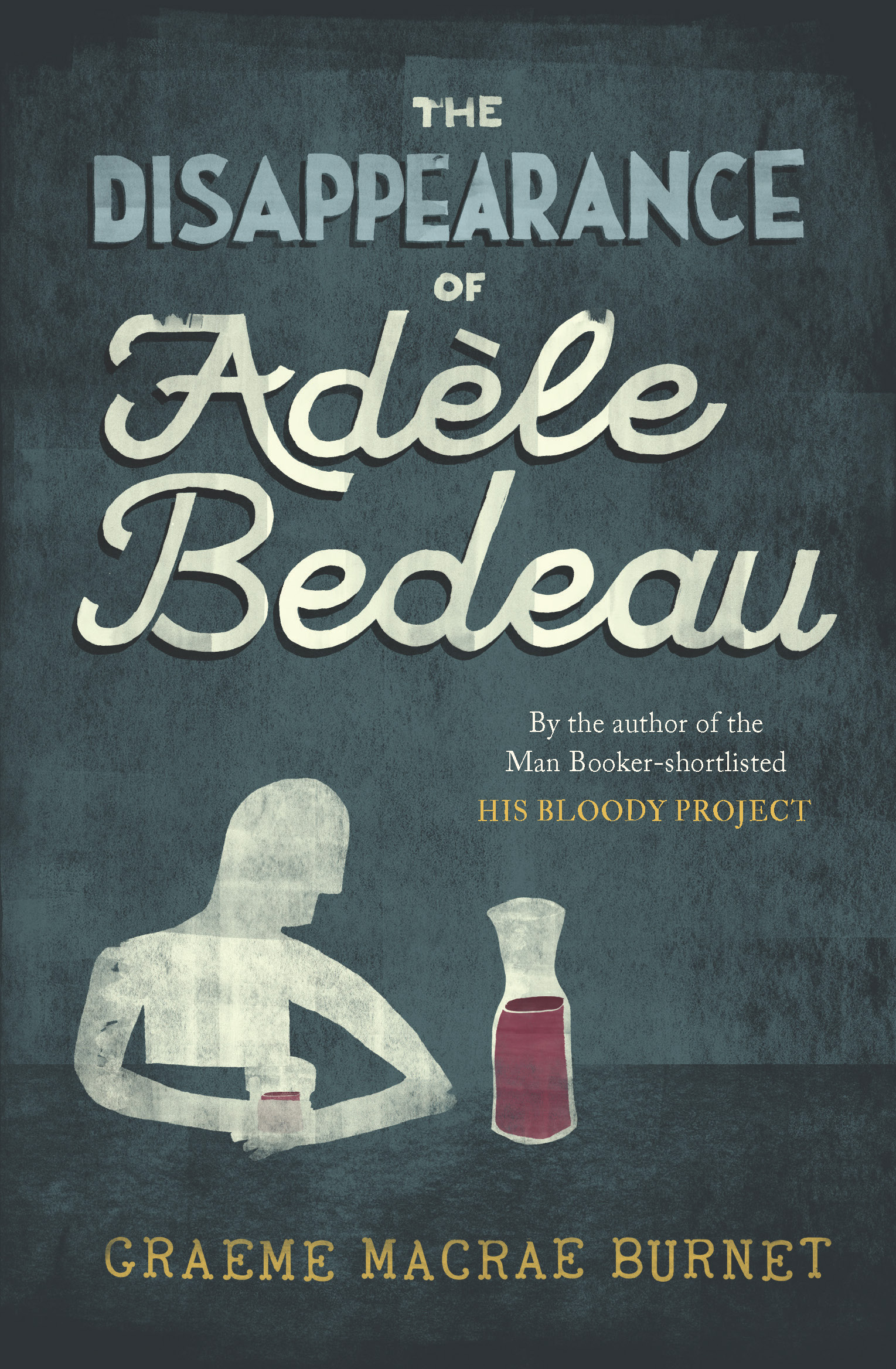
The Disappearance of Adèle Bedeau

Introducing Detective Georges Gorski… From the twice Booker-listed author of His Bloody Project and Case Study.
Manfred Baumann is a loner. Socially awkward and ill at ease, he spends his evenings surreptitiously observing Adèle Bedeau, the sullen but alluring waitress at his local bistro. But one day, she vanishes into thin air. When Detective Georges Gorski begins investigating her disappearance, Manfred’s repressed world is shaken to its core and he is forced to confront the dark secrets of his past.
The Disappearance of Adèle Bedeau effortlessly conjures up an otherworldly atmosphere that simultaneously intrigues and unsettles. A compelling psychological portrayal of a peculiar outsider pushed to the limit by his own feverish imagination, it is by turns haunting, strange and mesmeric. In this new tenth anniversary edition of Graeme Macrae Burnet’s acclaimed debut, the metafictional “translator’s note” is positioned as a foreword, in line with the author’s original idea for this magnificent trilogy of literary mysteries.
A.L. Kennedy
A.L. Kennedy was born in Dundee. and now divides her time between Scotland and the East Midlands. She has won a variety of UK and international book awards, including a Lannan Award, the Costa Prize, the Heinrich Heine Preis, the Somerset Maugham Award and the John Llewellyn Rees Prize. She has twice been included on the Granta Best of Young British Novelists list. She has written ten novels, one of which was longlisted for the Booker Prize, six short story collections, three books of non-fiction and three books for children. She also performs occasionally in one-person shows and as a stand-up comic.
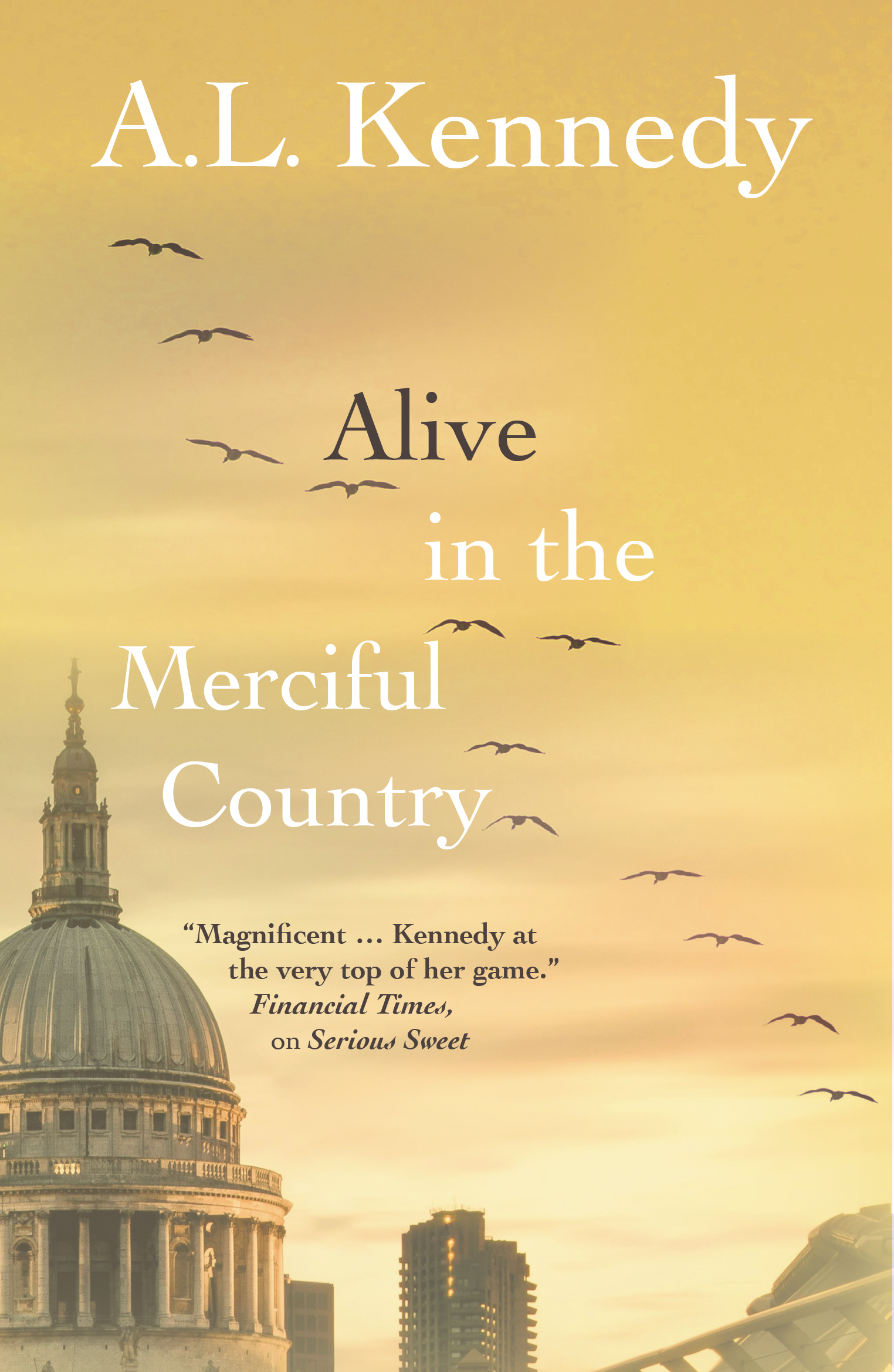
Alive in the Merciful Country
by A.L. Kennedy
From a Costa Book of the Year winner, Booker nominee and double Granta-selected Best Young British novelist comes a searing portrayal of trauma, police abuse and the power of hope.
Teaching nine-year-olds on Zoom. A relationship interrupted by enforced distance. A teenaged son who cannot leave the house. Anna McCormick is already struggling to cope with the unwanted twists 2020 has served up. But when an unstamped envelope arrives overnight, her past begins to cast its own long shadow on the present.
With an uncaring government compounding her woes and a hostile threat drawing closer, Anna must dig deep to keep hope alive for herself and those around her.
This is a twisty, heart-racing page-turner and viscerally rendered portrayal of abuse of power by the state, by the police and by the villains much closer to home.
REVIEWS OF Alive in the Merciful Country
'Kennedy is a superb writer and the canniness of her observation keeps you reading' Sunday Times
'It seems everything [Kennedy] touches turns to art … she continues to impress with her psychological fearlessness and breathtaking affection for language.' New York Times
'Kennedy is a force of nature.' New York Times
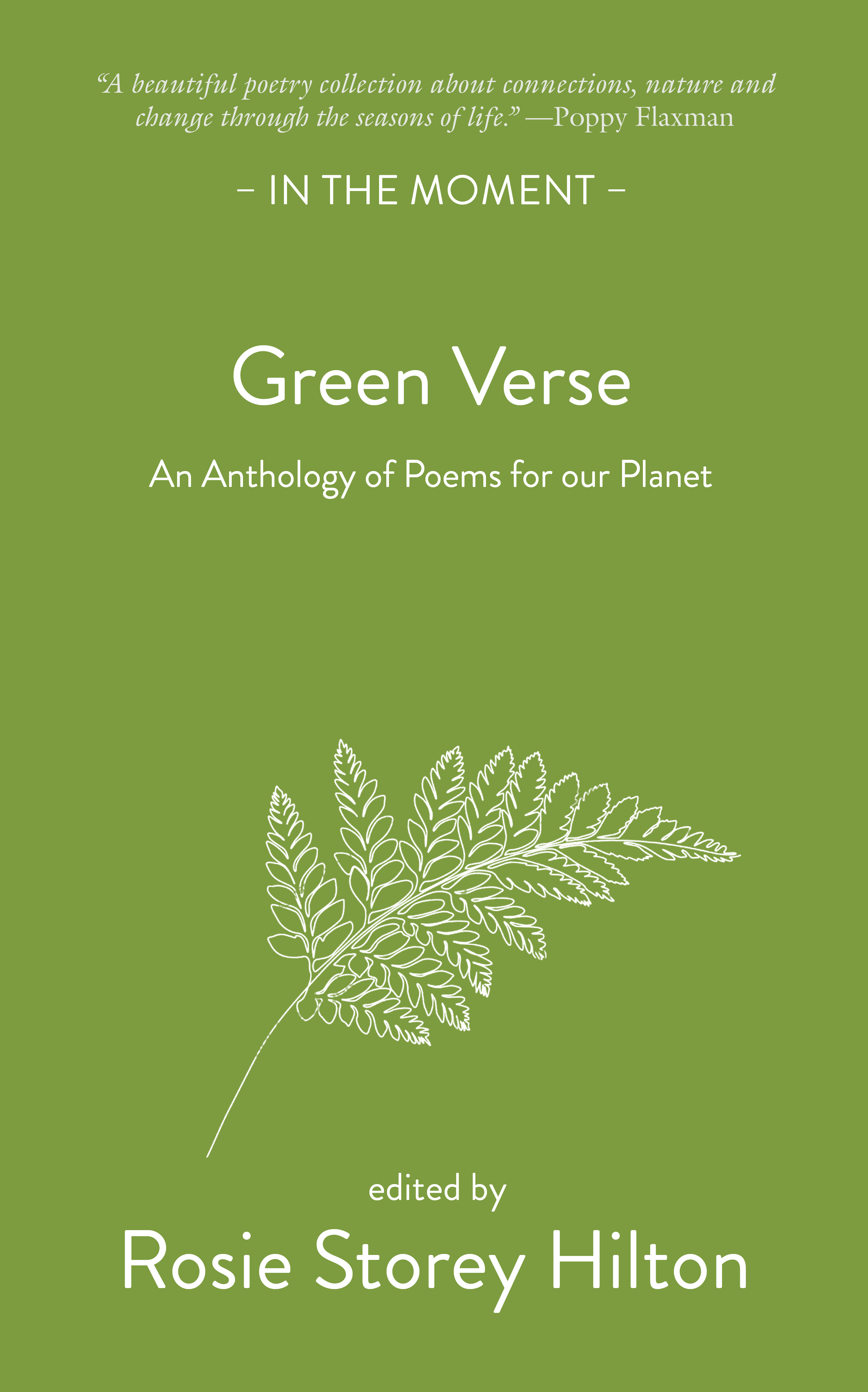
Taking time for nature poetry is an act of reverence for the natural world, and a path to understanding our part in it.
Nature poetry has been redefined through the centuries, shapeshifting through the major upheavals of our relationship with the landscapes, plants and non-human species with whom we share the earth. As our environment is destabilised and threatened by the climate crisis, we can once again find new meanings, causes for hope and catalysts for action in these poems.
Arranged by season – and full of surprises – this anthology shows the vast breadth of writing on the natural world, and challenges homogenous ideas of what a nature poet can look like. The choices in this anthology see beloved poets celebrated alongside new and emerging writers, who voices echo the urgency of the crisis we now face. Together, they show what we have in common across countries and centuries: an undeniable kinship with nature, and a fierce will to protect it.
These poems will transport you, sending you into the garden, forests and rockpools with searching hands and open eyes.

Helen Moat
Helen Moat is the author of A Time of Birds (Saraband, 2020), a travelogue of her journey across Europe, by bike, with her teenage son. She has also written multiple travel guides and is a regular contributor to Derbyshire Life, BBC Countryfile magazine, Wanderlu
“Every year for as long as I could remember, I dreaded the shortening days, the fog and the rain. But what if I went outdoors instead?”
Helen Moat used to hide from winter: she would hunker down inside, yearn for the sun, and wait it out. So when she heard others call it their preferred season, she went on a mission to discover what they saw in the months she found so difficult.
Trying to understand why some of the darkest and coldest countries in the world have the lowest rates of seasonal depression, she dives into cultural practices from warming winter food to traditional book gifting and finds that forcing herself outside in the cold unexpectedly invigorates her and pushes her into deepened human connections.
Journeying across Finland, Iceland, Wales and, just once, escaping to the warmth of Spain, While the Earth Holds its Breath nurtures resilience and determination. Ultimately, it finds a positivity that does not ignore the darkness, but finds something to love there.
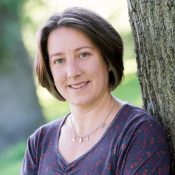
Anna Levin
Anna Levin is a writer with a special interest in people’s connection with the natural world, and she makes complex scientific subjects interesting and accessible to a general readership.
A former section editor with BBC Wildlife, Anna now writes for a wide variety of publications and environmental organisations. She collaborated with renowned wildlife photographer Laurie Campbell for the book Ripples on the River – Celebrating the Return of the Otter (2021, Bloomsbury).
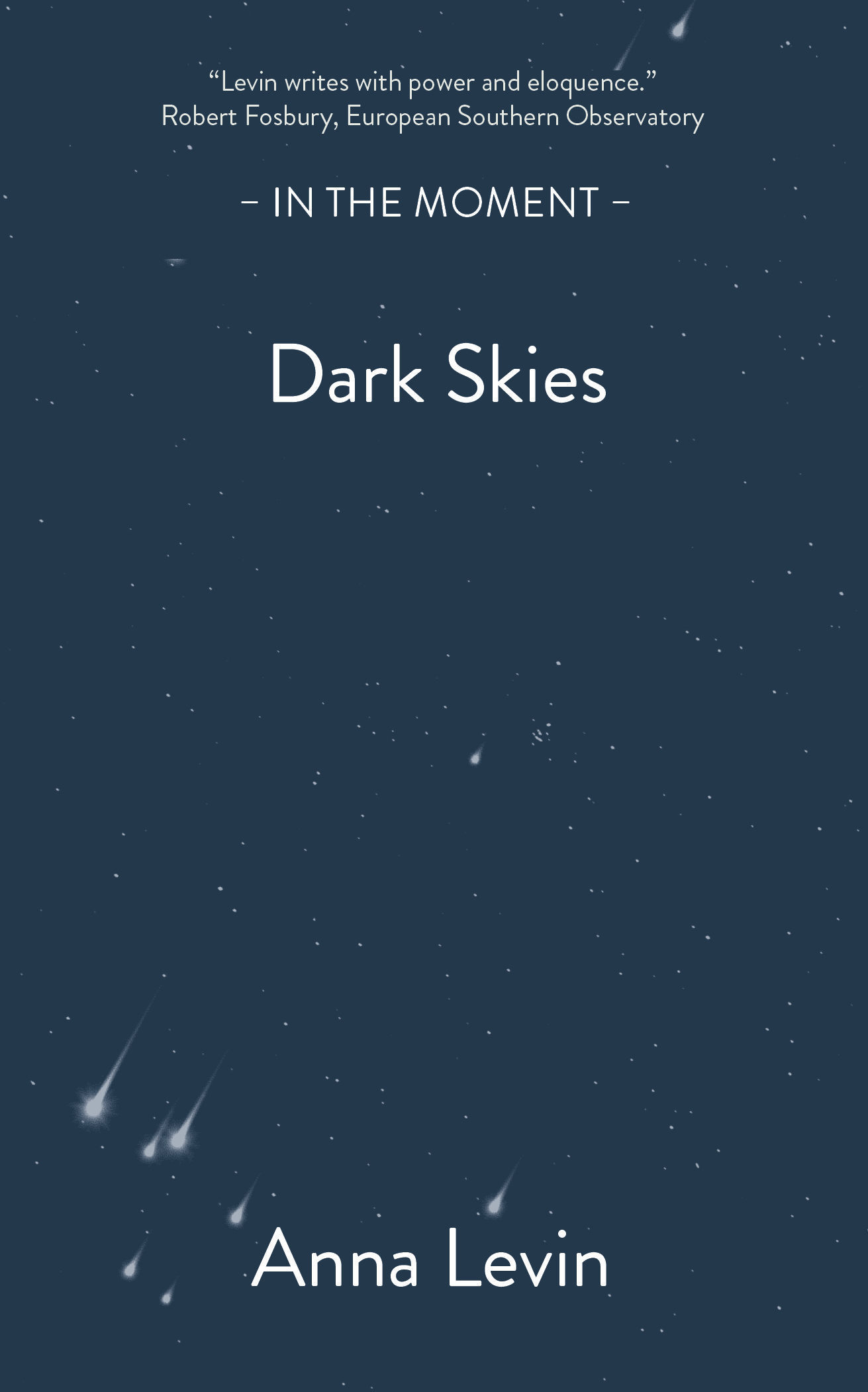
Her book Incandescent, a deep dive into our relationship with artificial light, was published in 2019. Her latest book, Dark Skies, part of the In the Moment series, highlights the importance of dark and starry skies and our relationship with the night.
Dark Skies
by Anna Levin
The darkness of the night represents something unknowable – even frightening – to many. But when we really look up and into it, we can find celestial light shows, whole ecosystems, and, perhaps, a new perspective.
The night sky offers something essential – a connection to something bigger than ourselves that can, in turn, help us understand ourselves and each other better. Humans have recognised and tried to make sense of this feeling since ancient times. For so many – from physicists and astronauts to astrologists and artists – the night sky has been a source of inspiration, wonder and exploration.
But now our relationship to dark skies is changing as our access to them is depleted. Light pollution all over Earth can be seen from space, altering the landscape and outlining the coasts. And if we look from Earth into space, we can see artificial light there, too. In this short volume, Anna Levin looks at how we can learn from and nurture our relationship with the night sky even and especially in the context of our changing world.
As you learn how to see and treasure the night sky, a sense of wonder about the universe will help you to understand more about our own pale blue dot.
Graeme Macrae Burnet
Graeme Macrae Burnet was born in Kilmarnock and now lives in Glasgow. He is the author of five novels and a novella. His novels are His Bloody Project, Case Study and the French-set Gorski trilogy, the final part of which A Case of Matricide was published in October 2024. His novella Benbecula was published in October 2025 in Polygon’s Darklands series. The Guardian called it ‘intense and utterly compelling.’
His Bloody Project was shortlisted for the 2016 Booker Prize, the LA Times Mystery Book of the Year and the European Crime Fiction prize and won the Saltire Prize for Fiction. It was variously described as ‘astonishing’, ‘fiendishly readable’ and ‘spellbinding’. Case Study was longlisted for the 2022 Booker Prize, shortlisted for the Gordon Burn Prize and included in the New York Times 100 Notable Books of 2022. Hannah Kent called it ‘a novel of mind-bending brilliance.’ The Financial Times declared A Case of Matricide ‘a triumph’. It won the Australian Crime Writers Best International Crime award.
Graeme’s work has been translated into more than twenty languages, and he has appeared at festivals all over the world.
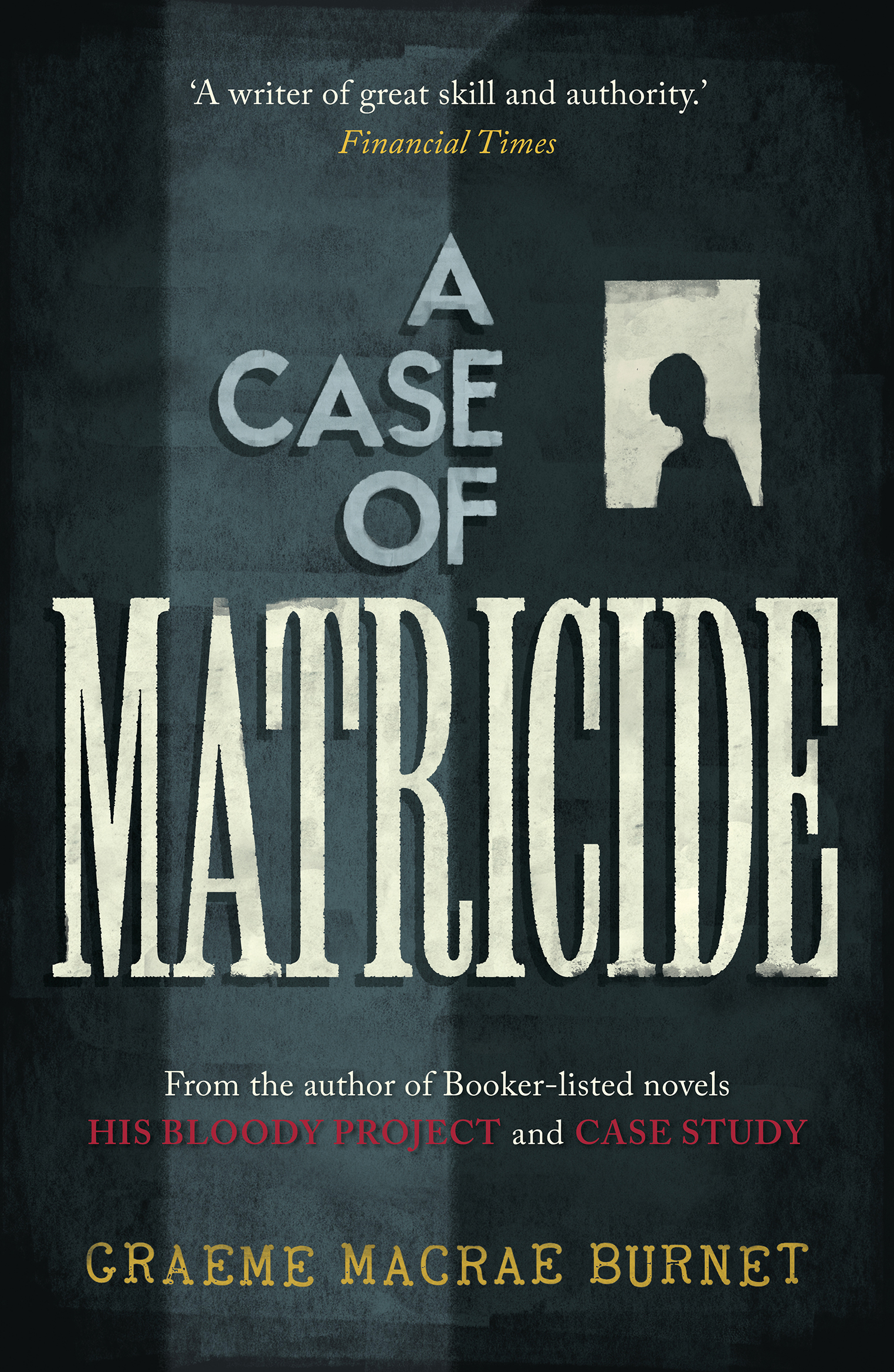
A Case of Matricide
Chief Inspector Gorski returns …
In the unremarkable French town of Saint-Louis, a mysterious stranger stalks the streets; an elderly woman believes her son is planning to do away with her; a prominent manufacturer drops dead. Between visits to the town’s hostelries, Chief Inspector Georges Gorski ponders the connections, if any, between these events, while all the time grappling with his own domestic and existential demons.
Graeme Macrae Burnet once again pierces the respectable bourgeois façade of small-town life in this, the concluding part of his trilogy of Gorski novels. He injects a wry humour into the tiniest of details and delves into the darkest recesses of his characters’ minds, but above all provides an entertaining, profound and moving read.

J. David Simons
J. David Simons is a Scottish author, media journalist and literary editor. His first novel, The Credit Draper, was shortlisted for the McKitterick Prize, and his subsequent novels include The Liberation of Celia Kahn (2011), The Land Agent (2014), A Woman of Integrity (2017), The Responsibility of Love (2021), as well as An Exquisite Sense of What is Beautiful (new edition published in 2023). He has been awarded several bursaries from Creative Scotland and the Society of Authors and in 2012 was the recipient of a Robert Louis Stevenson Fellowship.
Simons is also a former lawyer, charity administrator, cotton farmer and university lecturer. His nomadic lifestyle has allowed him to spend considerable time in Israel, Australia, Japan and the United States, and he currently lives in Javea, Spain.
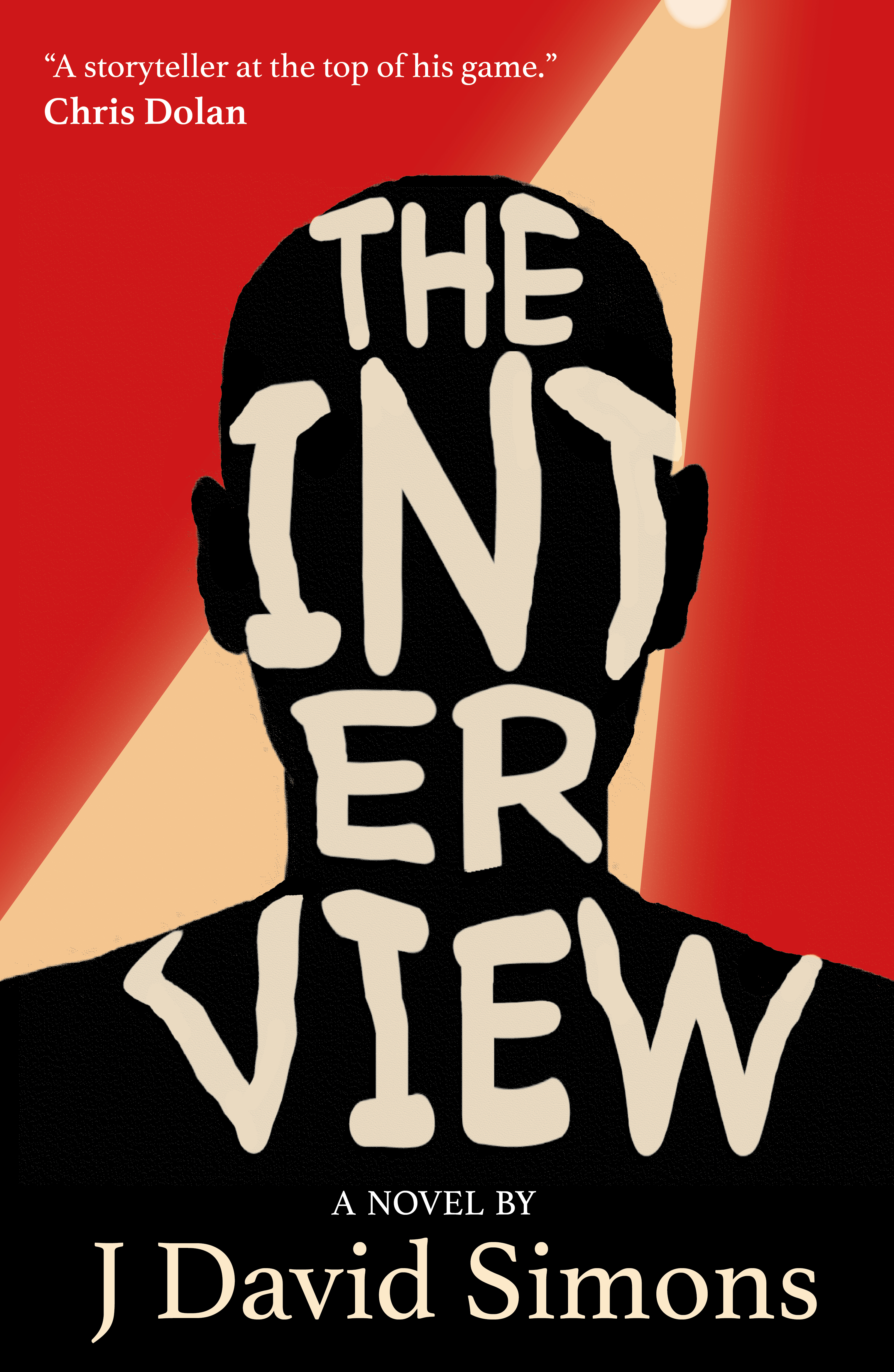
The Interview
The President is dead.
Cal Drummond is hiding out deep in the woods of the American South when he hears the news. Once a famous talk show host, he is now a disgraced man living a solitary existence in a cabin, drinking Jack Daniels, enjoying the cover of the trees, and getting on with life as Hank MacPhearson.
But this news – and the journalist who delivers it – will have consequences that reach far back into Cal’s past. They threaten his new life and identity, but they also throw him one final chance: it was an interview that brought about his downfall, but could it be another one, this time with him in the hotseat, that could bring him back to life?
Taking the reader from Scotland to Mexico and from California to Georgia, The Interview is a novel not only about speaking truth to power, but also about speaking truth to oneself.
Casey Plett
Casey Plett is the author of A Dream of a Woman, Little Fish, A Safe Girl to Love, the co-editor of Meanwhile, Elsewhere: Science Fiction and Fantasy From Transgender Writers, and the Publisher at LittlePuss Press. She has written for The New York Times, Harper’s Bazaar, The Guardian, The Globe and Mail, McSweeney’s Internet Tendency, the Winnipeg Free Press, and other publications. A winner of the Amazon First Novel Award, the Firecracker Award for Fiction, and a two-time winner of the Lambda Literary Award, her work has also been nominated for the Scotiabank Giller Prize.
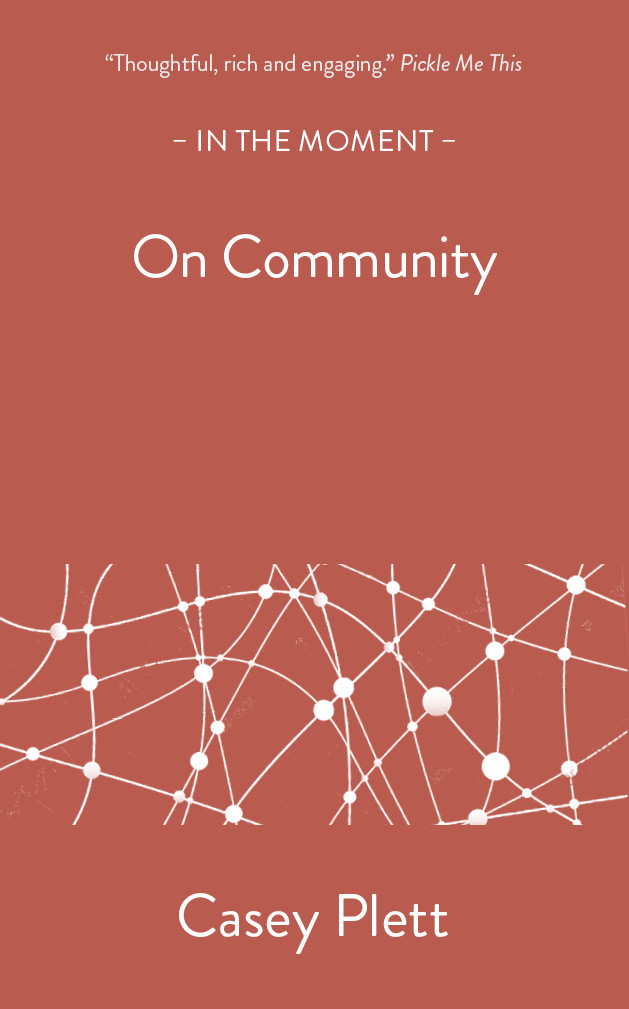
On Community
by Casey Plett
Community. It’s a word we are used to hearing everywhere from political speeches to fast-food advertisements. But can we really define it?
Using her own experiences, joyful or painful, in communities, as well a strong analysis of political and cultural shifts, Casey Plett shows how overuse of the word has caused it to become disconnected from the reality it signifies.
Here, Plett suggests an alternative, moving towards a definition that acknowledges community as necessary for our existence – a source of comfort, knowledge and love – even while it has the potential to become dogmatic, cliquey or outright harmful.
On Community does crucial work in pushing harder on words and ideas we take for granted. It invites us to be more careful and intentional with our language, to consider how we relate to those we know – and to those we don’t know at all.
