

Jim Crumley
Jim Crumley is the author of more than forty books, mostly on the wildlife and wild landscape of his native Scotland, many of them making the case for species reintroductions, or ‘rewilding’. His Seasons series, a quartet of books exploring the wildlife and landscapes and how climate change is affecting our environment across the four seasons, is highly acclaimed. The Nature of Autumn was longlisted for the Wainwright Golden Beer Book Prize 2017 and shortlisted for the Richard Jefferies Society and White Horse Bookshop Literary Prize 2017. The third in the series, The Nature of Spring, was Radio 4’s Book of the Week. The Nature of Summer, was shortlisted for the 2021 Highland Book Prize. The Eagle’s Way was shortlisted for a prestigious Saltire Society award, and his Encounters in the Wild series – which sees Jim get up close and personal with Britain’s favourite animals – has found him many new readers. He has written about the return of the beaver to the UK’s wetlands in Nature’s Architect, and his most recent title is Lakeland Wild, his first to focus entirely on an English landscape. Lakeland Wild was longlisted for the 2022 Lakeland Book of the Year prize. Jim is also a poet, an occasional broadcaster on both radio and television and a widely published journalist who wrote columns for the Dundee Courier for many years and has a monthly column in The Scots Magazine.
The Seasons quartet is now available in one handsome hardback edition, Seasons of Storm and Wonder.
Badger
by Jim Crumley
BUYING OPTIONS
Buy Badger


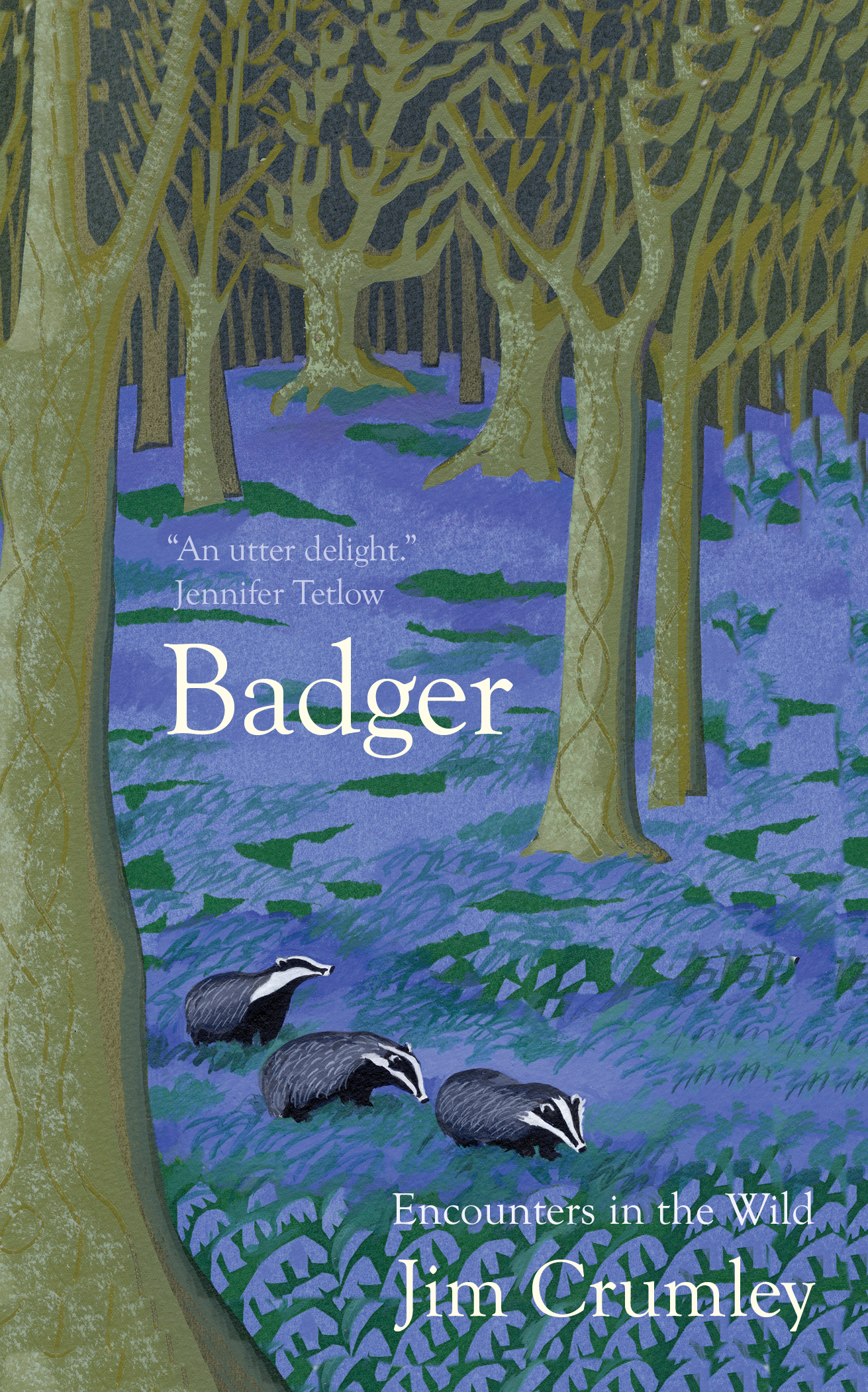
In the Encounters in the Wild series, renowned nature writer Jim Crumley gets up close and personal with British wildlife. With his inimitable passion and vision, he relives memorable encounters with some of our best-loved native species, offering intimate insights into their extraordinary lives.
“Suddenly the boar’s face was back, peering up from almost ground level beneath the lowest sweep of the spruce branches. Almost at once, the sow was right beside him. Then came the cubs. For perhaps ten seconds, no more, all four faces gleamed garishly out of the forest at me. They looked like nothing so much as characters in a puppet theatre and an absurd image came into my head of the puppet master crouched behind them, dangling two puppet masks on strings from each hand. In all my badger encounters, nothing has charmed me so utterly as those ten seconds.”
Prizes and awards
Lakeland Book of the Year prize 2022: Longlisted
Highland Book Prize 2021: Shortlisted
Wainwright Golden Beer Book Prize 2017: Longlisted
Richard Jefferies Society and White Horse Bookshop Literary Prize 2017: Shortlisted
Saltire Society Literary Award 2014: Shortlisted
Karen Lloyd
Karen Lloyd is an award-winning writer of non-fiction and poetry based in Kendal, Cumbria. Her 2022 book, Abundance, was long- listed for the Wainwright Prize for Conservation Writing. Both her debut, The Gathering Tide, and her second book, The Blackbird Diaries, won Lakeland Book Awards and were selected as books of the year, in the Observer and the Birdwatcher’s Handbook. She has contributed to the Guardian, Royal Geographical Society magazine, BBC Wildlife and Countryfile, and she edited and produced Curlew Calling Anthology. Karen gained her PhD from Lancaster University, where she taught on the Creative Writing MA and was writer in residence at the university’s Future Places Centre.
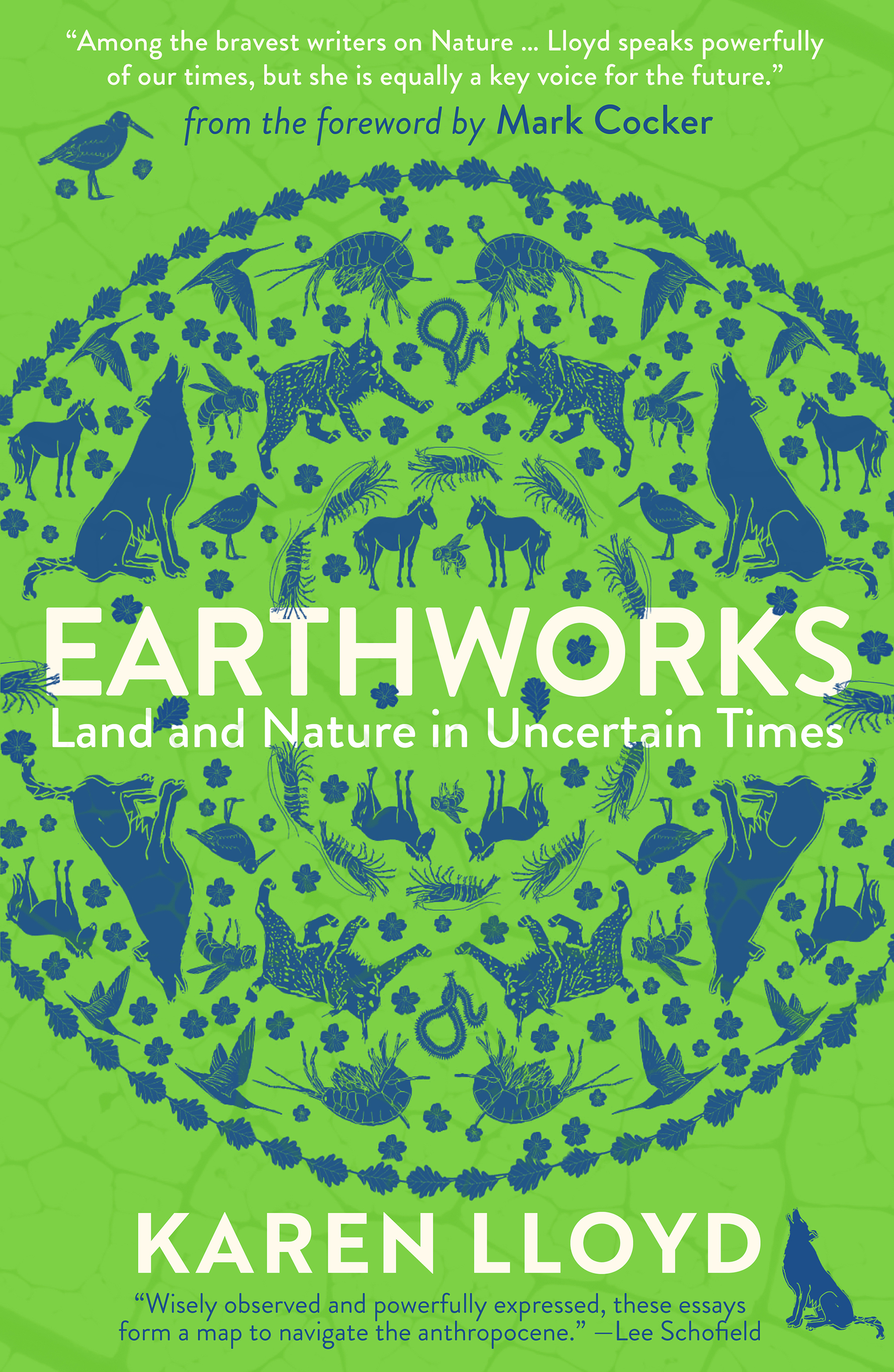
From the rainforests of Costa Rica to the Balkans and Scotland, Karen Lloyd explores the hidden life of habitats and species including sloths, the rockpool shrimp and the world’s only truly wild horse. She studies the biodiversity of urban wildflower meadows and the contested spaces of landscape recovery, including in the Lake District where she lives, assessing our human impact on the lives of creatures whose survival is deeply intertwined with our own.
In an era marked by escalating environmental crisis, this luminous collection challenges us to understand that preserving our planet demands recognising the intrinsic rights of our fellow species; that social and environmental justice are inseverable. Lloyd’s essays blend lyrical observation with urgency and philosophical depth, arguing for new directions for conservation. This collection is a rallying call – a celebration of renewal and resilience – for all who care about Earth’s future.
REVIEWS OF Earthworks
“In Earthworks, Karen Lloyd again confirms herself as one of our most vital and ambitious writers on nature and place… Few writers evoke so powerfully, and so personally, both the wounds and the wonder of the living world.” Professor Ian Convery, IUCN Commission on Ecosystem Management Vice Chair
“In this brilliant collection … Lloyd’s writing is realistic, unsentimental, and refuses any romanticisation of ‘nature’ but, at the same time, evinces a deep love of, and respect for the environment in all its complexities.” Professor Charlie Gere, Lancaster University
“An intensely optimistic book, where hope comes not from denial, but from a careful and studied attention to the natural world - both the writing and the thinking are precise, vivid and engaging: it's a delight to spend time in the company of this writer.” Jenn Ashworth, award-winning author
“Lloyd has packed the explosives, lit the fuse and lobbed in our direction the bravest and boldest volume of Nature writing this century. And then she's walked towards the fire. This is fearless writing at its Orwellian best.” Mark Cocker, multi-award-winning author and naturalist
“If everyone thought as deeply as Karen Lloyd does about our complex relationship with nature, the world would be a far better place. Wisely observed and powerfully expressed, these essays form a map to navigate the anthropocene.” Lee Schofield, award-winning author of Wild Places

Donald S Murray
Writer and poet Donald S Murray is an Honorary Fellow of the Association for Scottish Literature who has won the Society of Authors’ Paul Torday Memorial Prize (2012, for As the Women Lay Dreaming,) and the Callum Macdonald Memorial Award (2021), among many awards for his historical fiction, creative non-fiction and poems. His critically acclaimed books bring to life the culture and nature of the Scottish islands, and he appears regularly on BBC Radio 4 and BBC Radio Scotland and as a live performer.
The Loch of the Bees
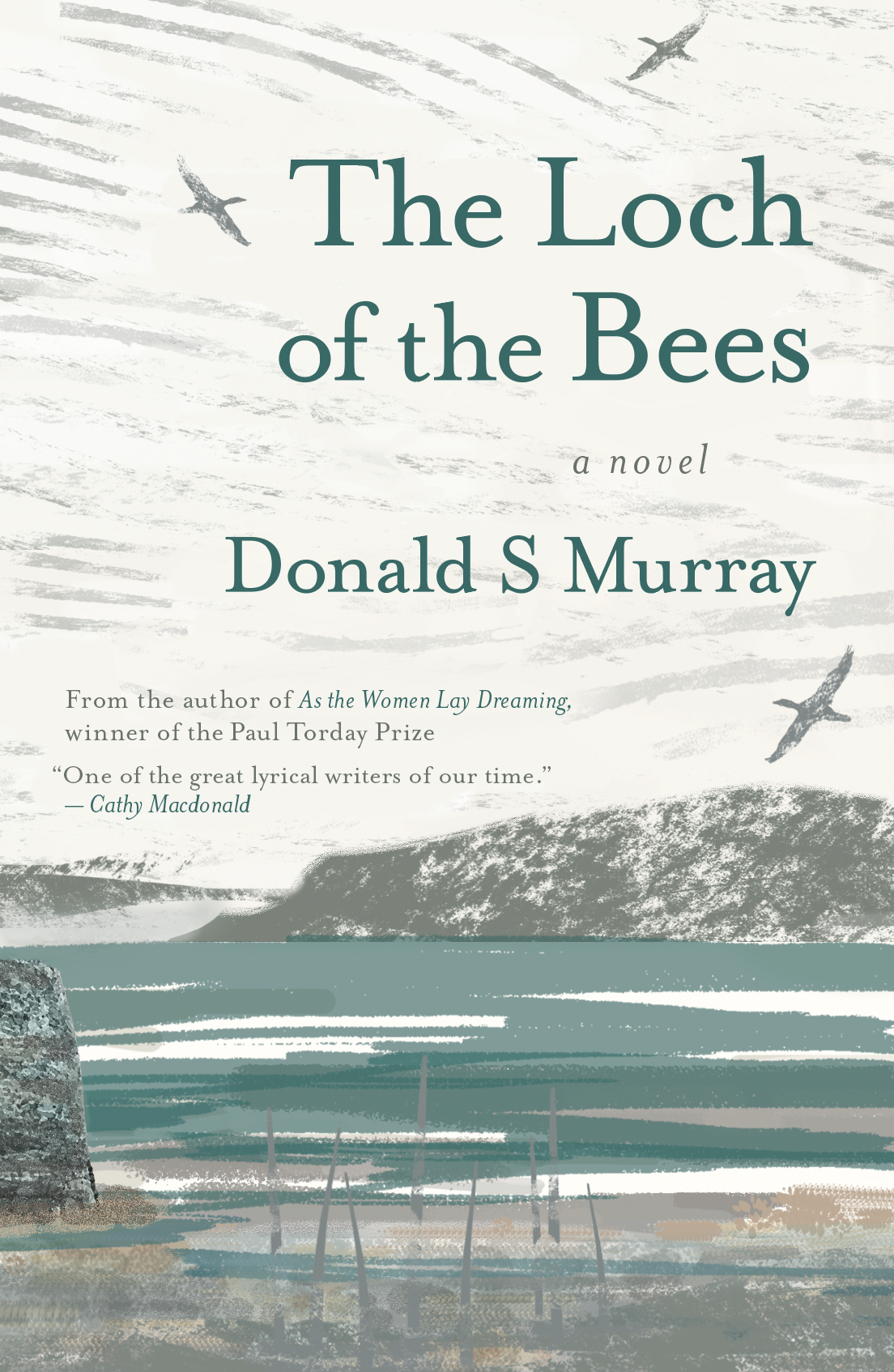
From the author of the prizewinning As the Women Lay Dreaming comes an evocative and deeply original novel that reimagines the lives of Hebrideans across the centuries, sweeping from the eighth century to the present day.
Interlinked stories unfold across generations, layered like blankets of peat, where fragments of earlier lives lie preserved and later resurface: a sword hidden by a Viking raider; a rosary left behind in a place of sanctuary by a troubled priest.
Past struggles, betrayals, loves and losses reverberate in the lives of modern islanders, woven and distilled by the legacies of the Clearances and devastating wars. Again and again, men and women return to the beehive-shaped stone shelter on a tiny island at the edge of the Loch of the Bees — a place of refuge, memory and renewal.
Here, the land keeps its secrets, and time curves back on itself, as the living find connection with those who came before.
Prizes and awards
Paul Torday Memorial Award 2020: Winner
The Herald Scottish Culture Awards, Outstanding Literature Award: Shortlisted
Authors’ Club Best First Novel: Shortlist
HWA Debut Crown: Longlist
Highland Book Prize: Longlist
Walter Scott Prize: Commendation
REVIEWS OF The Loch of the Bees
"A beautiful and bittersweet portrait of an extraordinary place." Antonia Senior, The Times
“Murray has …established himself as a strong and sonorous voice of the isles, and that voice finds glorious expression in The Loch of the Bees. … Compassion and humanity shine through this rich, rewarding novel, which portrays every individual as part of something bigger and a community greater than the sum of its parts.” Alastair Mabbott, The Herald
Susie White
-
Susie White is a gardening and travel writer, broadcaster, wildlife photographer and lecturer. A lifelong and passionate gardener, she developed the garden at Chesters Walled Garden on Hadrian’s Wall in Northumberland. Since then she has created a garden from scratch in a hidden valley on previously uncultivated land. Beyond the garden, Susie’s interests include the environment, conservation, wildlife, upland hay meadows, archaeology, heritage skills and the landscape and walks of the North Pennines, Northumberland, and the Lake District. She is a regular contributor to the Guardian, BBC Countryfile, The English Garden, Homes and Gardens, and is garden columnist for My Weekly magazine. A member of the Garden Media Guild, and RHS speaker, she is the author of Gardens of Northumberland and the Borders, Second Nature and The Gardener and the Moth.
BUYING OPTIONS
Buy Nature’s Almanac
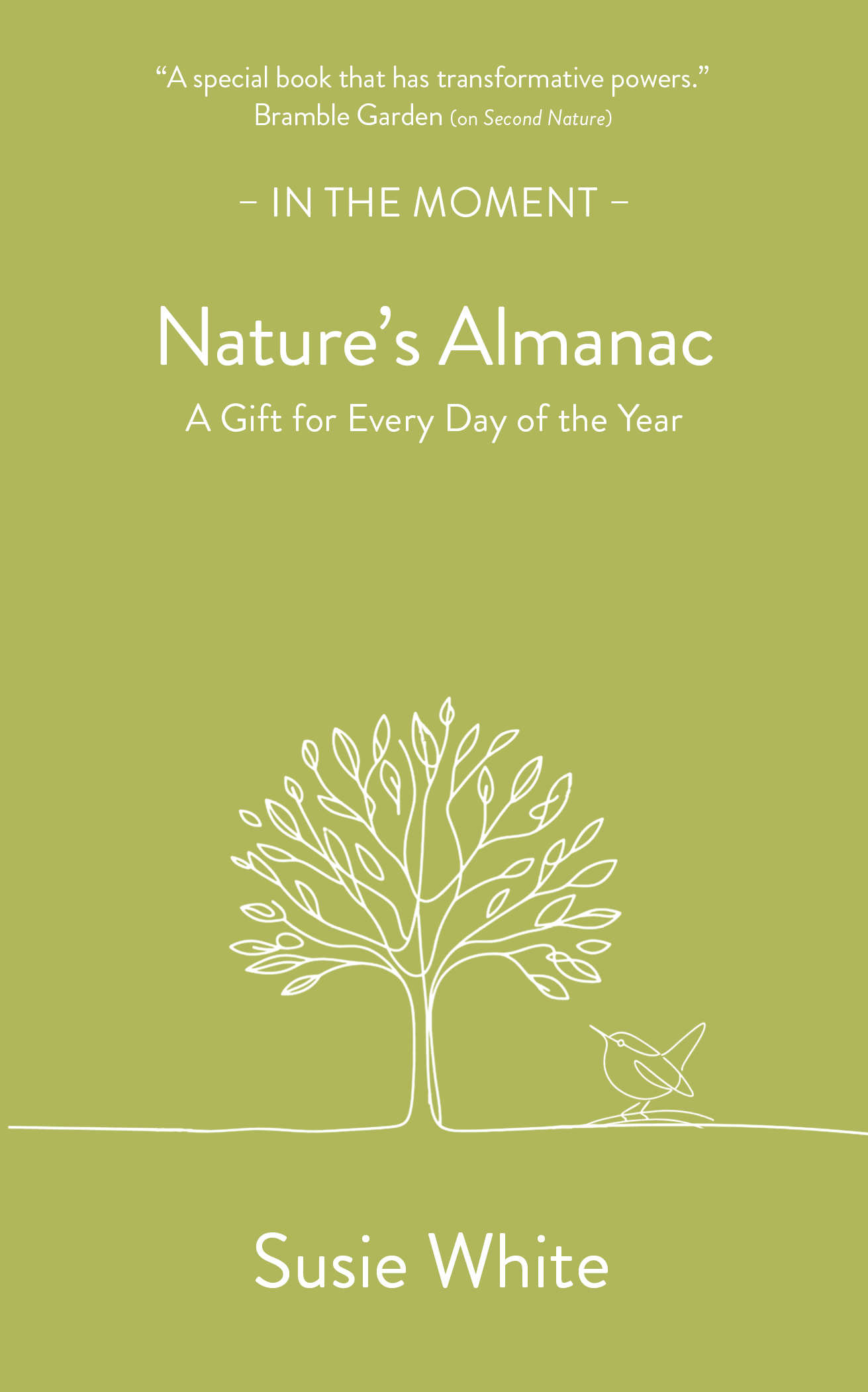
Discover the extraordinary in every day with Nature’s Almanac, by renowned wildlife and biodiversity gardener Susie White.
This beautifully compact book invites you to pause and notice one remarkable phenomenon of the natural world each day, drawing inspiration from the Japanese tradition of microseasons—seventy-two poetic intervals that celebrate nature’s subtle shifts. With her signature blend of lyrical observation, experience and insight, Susie guides readers through fleeting moments: the first snowdrop buds of spring, the song of larks on the wing, or the golden turning of leaves as the days shorten once more. Each entry is enriched by Susie’s deep expertise as a gardener and naturalist, offering practical wisdom and gentle encouragement to engage more closely with the world around us.
Let this book be your companion for mindful living, helping you rediscover the joy of nature’s ever-changing beauty, one day at a time.
Jim Crumley
Jim Crumley is the author of more than forty books, mostly on the wildlife and wild landscape of his native Scotland, many of them making the case for species reintroductions, or ‘rewilding’. His Seasons series, a quartet of books exploring the wildlife and landscapes and how climate change is affecting our environment across the four seasons, is highly acclaimed. The Nature of Autumn was longlisted for the Wainwright Golden Beer Book Prize 2017 and shortlisted for the Richard Jefferies Society and White Horse Bookshop Literary Prize 2017. The third in the series, The Nature of Spring, was Radio 4’s Book of the Week. The Nature of Summer, was shortlisted for the 2021 Highland Book Prize. The Eagle’s Way was shortlisted for a prestigious Saltire Society award, and his Encounters in the Wild series – which sees Jim get up close and personal with Britain’s favourite animals – has found him many new readers. He has written about the return of the beaver to the UK’s wetlands in Nature’s Architect, and his most recent title is Lakeland Wild, his first to focus entirely on an English landscape. Lakeland Wild was longlisted for the 2022 Lakeland Book of the Year prize. Jim is also a poet, an occasional broadcaster on both radio and television and a widely published journalist who wrote columns for the Dundee Courier for many years and has a monthly column in The Scots Magazine.
The Seasons quartet is now available in one handsome hardback edition, Seasons of Storm and Wonder.
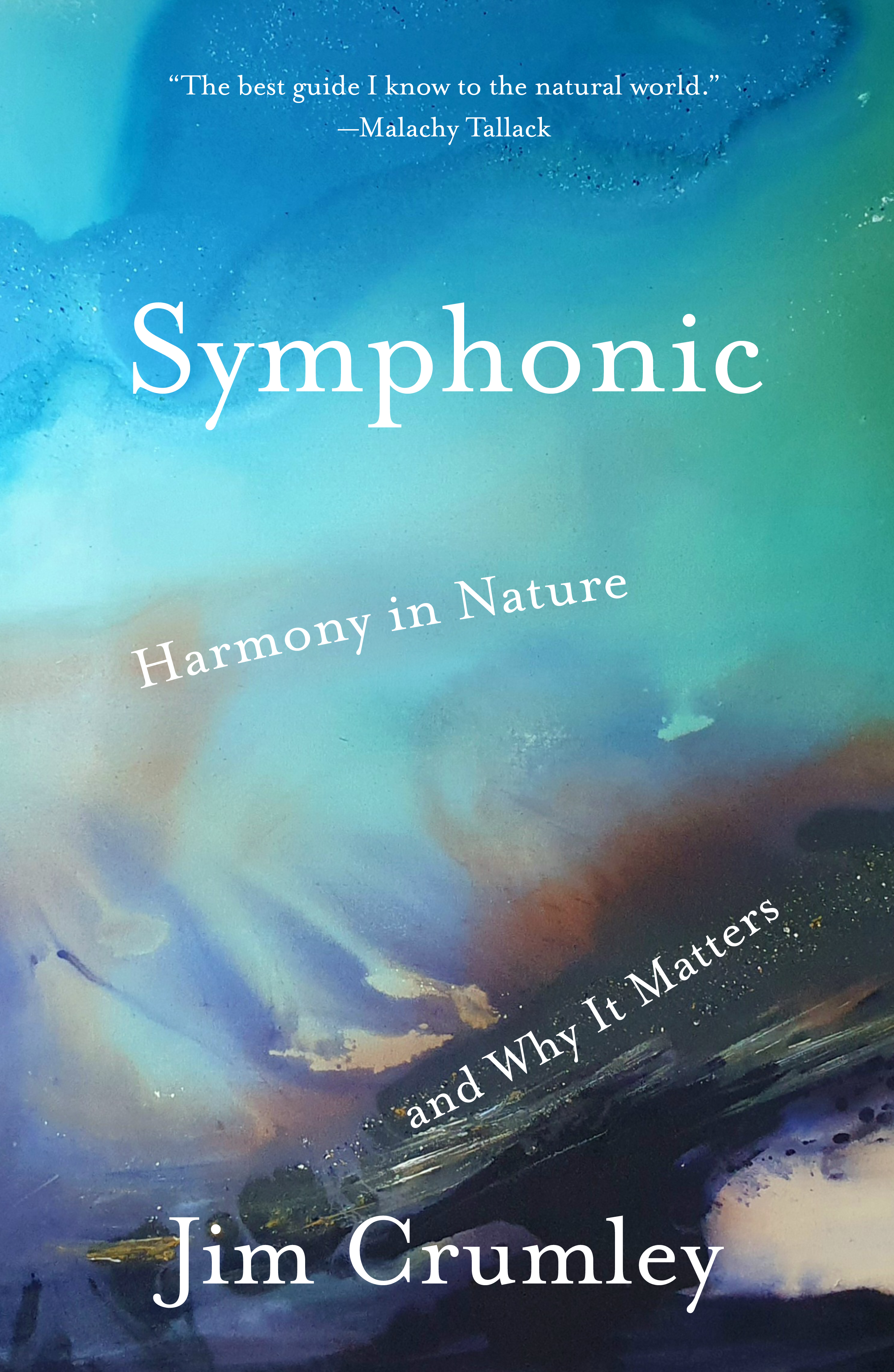
A lyrical and personal account of Jim Crumley’s lifelong quest to find harmony in nature as he celebrates our precious planet.
Renowned nature writer Jim Crumley draws on more than six decades of immersion in wild landscapes to explore the profound harmony at the heart of the natural world—and why it matters now more than ever.
With the lyrical clarity and passionate advocacy that have made him Scotland’s foremost nature commentator, Crumley weaves together close observation, personal encounters, and ecological insight to reveal nature as a vast, interconnected symphony. He argues that our survival depends on relearning how to listen to the land, to recognise our place within the great orchestration of life rather than apart from it. Through evocative prose built on his expertise and care, Crumley urges us to defend the beauty and balance of the living world, offering both a celebration and a clarion call.
Symphonic is a vital testament from a writer whose life’s work is a passionate defence and celebration of nature’s enduring—and endangered—harmony.

Kenneth Steven
Kenneth Steven is a successful poet, novelist and children’s writer who has published some 25 books. His BBC Radio 4 documentary on the island of St Kilda won him a Sony Award. His previous novel, The Well of the North Wind (SPCK, 2016), was a spiritual tale set on 6th-century Iona, whilst Beneath the Ice (Saraband, 2016) tells the story of the Arctic Sami people. His latest novel, 2020, presents a dystopic vision of Britain at breaking point and was longlisted for The Portico Prize.
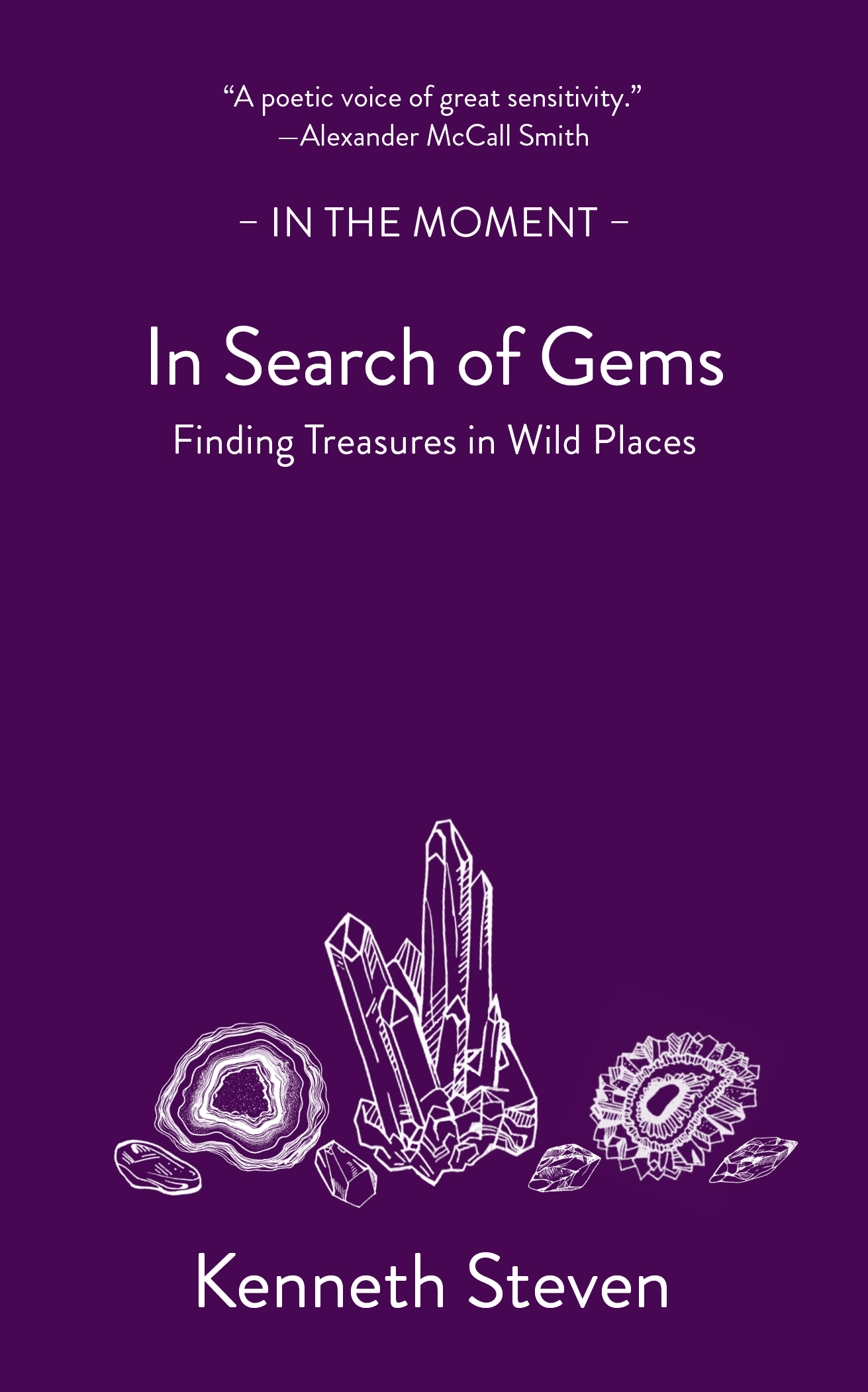
An evocative journey through geology and landscape, seen through the eyes of one of Scotland’s most beloved poets and storytellers.
Blending lyrical prose with personal reflection, Kenneth Steven explores mountains, glens and shores in search of gemstones and crystals. He recounts his delight at discoveries of gold glinting in Highland burns, freshwater pearls embedded in mussel shells, and aquamarines, amethysts, garnets, amber and agates hidden in the wild places where others rarely roam.
Beguiled by their forms, colours, and sometimes glittering brilliance, he finds the thrill of unearthing riches more precious and delightful even than the gems themselves. Stone by stone, he considers the origins and allure of these natural treasures, revealing not only their geological stories but their place in history and imagination. Steven’s deep connection to the land shines through as he interprets the meaning and magic, inviting readers to see both the landscape and its hidden gems with fresh wonder.
Prizes and awards
The Portico Prize 2019: Longlisted

Christina Riley
Christina Riley was born in Florida and grew up in Ayrshire on Scotland’s west coast, where she now resides. With a focus on coastal waters, her work draws attention to small details — a particular species, object or place — to shift perspectives and encourage new ways of seeing and experiencing our surroundings, natural and otherwise. Longlisted for Canongate’s Nan Shepherd Prize for Nature Writing, she has recently been published by Gutter, Extra Teeth, The Clearing, Caught by the River, Minding Nature and Little Toller and has presented work at solo and group exhibitions across the UK. Her first photobook, The Beach Today, was published by Guillemot Press in 2021 and her debut non-fiction book, on experiences and encounters underwater in Scotland, will be published in 2025. In 2019 she started The Nature Library, a travelling library exploring the role of literature in times of climate crisis, which opened a long-term premises in 2024.
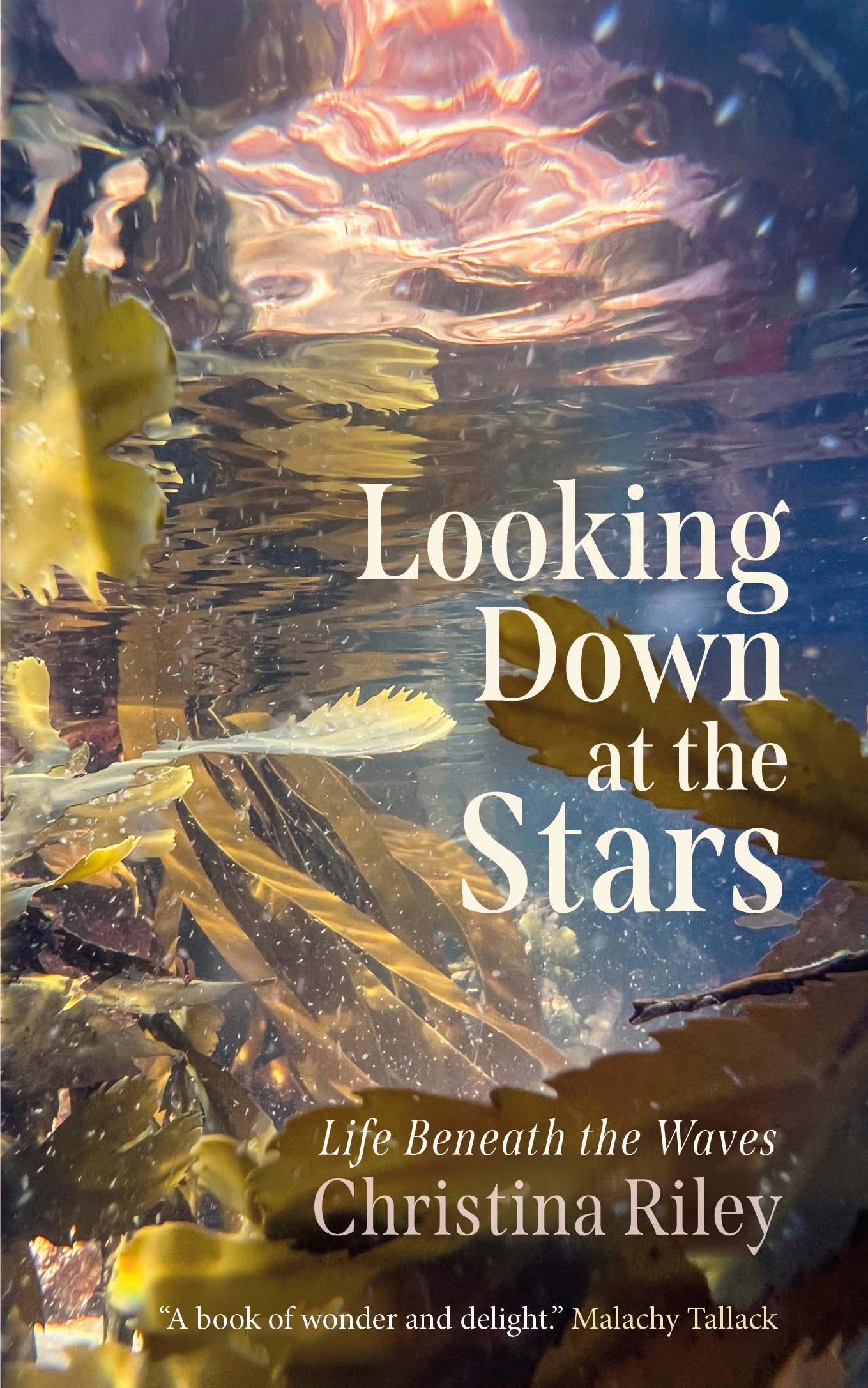
Discover the wonder of marine life seen up close in these joyous and sparkling essays.
In 2022, Christina Riley became an ‘underwater artist in residence’ at the Argyll Coast Hope Spot – a place of incredible natural beauty in Scotland also crucial for the health of the world’s oceans. She spent days submerged alongside marine life, before resurfacing to reflect, recreate and recount what she had seen – and the feelings of love, hope and responsibility her experience had evoked in her.
The resulting essays, collected in this stunning volume, swim through the kaleidoscope of marine life she found there, from starfish to seagrass to the water itself. What shines through all of them is a sense of wonder that is also a call to action. Looking Down at the Stars asks: how can we harness our feelings of awe at the natural world in order to take better care of it?
Christina Riley’s lyrical prose is the perfect guide to this unfamiliar underwater world, brimming with surprises, sunlight and sea stars.
Prizes and awards
Highland Book Prize 2025: Longlisted
REVIEWS OF Looking Down at the Stars
"Christina Riley is a tremendous writer, and a truly gifted observer. Her portraits of the underwater world are vivid and precise, often surprising, always illuminating. Looking Down at the Stars is a book of wonder and delight." Malachy Tallack, multi-award-winning author

Graeme Macrae Burnet
Graeme Macrae Burnet was born in Kilmarnock and now lives in Glasgow. He is the author of five novels and a novella. His novels are His Bloody Project, Case Study and the French-set Gorski trilogy, the final part of which A Case of Matricide was published in October 2024. His novella Benbecula was published in October 2025 in Polygon’s Darklands series. The Guardian called it ‘intense and utterly compelling.’
His Bloody Project was shortlisted for the 2016 Booker Prize, the LA Times Mystery Book of the Year and the European Crime Fiction prize and won the Saltire Prize for Fiction. It was variously described as ‘astonishing’, ‘fiendishly readable’ and ‘spellbinding’. Case Study was longlisted for the 2022 Booker Prize, shortlisted for the Gordon Burn Prize and included in the New York Times 100 Notable Books of 2022. Hannah Kent called it ‘a novel of mind-bending brilliance.’ The Financial Times declared A Case of Matricide ‘a triumph’. It won the Australian Crime Writers Best International Crime award.
Graeme’s work has been translated into more than twenty languages, and he has appeared at festivals all over the world.
His Bloody Project
Documents relating to the case of Roderick Macrae: 10th Anniversary Edition
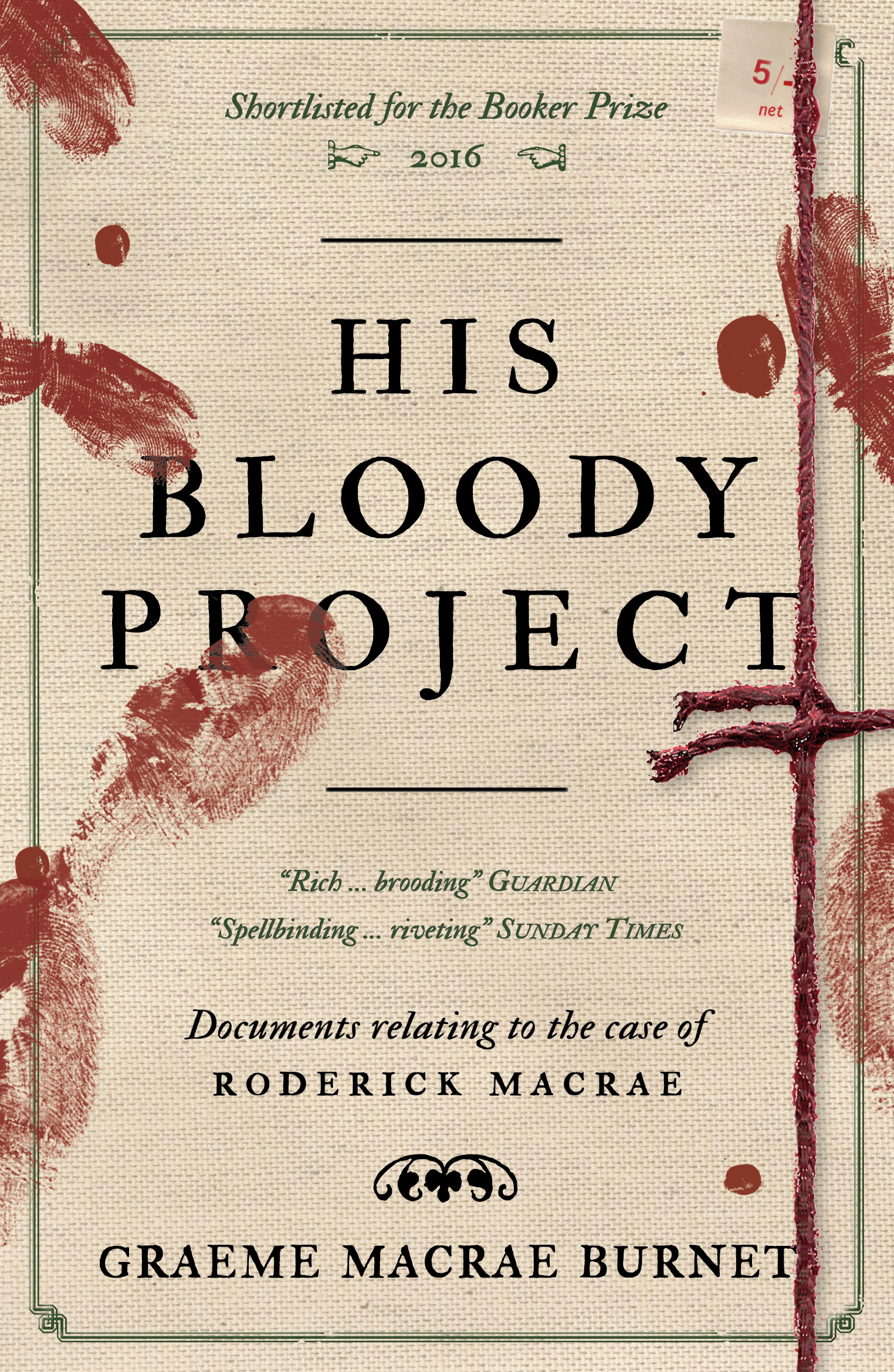
Graeme Macrae Burnet’s propulsive, Booker-shortlisted contemporary classic – reissued to mark its tenth anniversary.
The year is 1869. A brutal triple murder in a remote community in the Scottish Highlands leads to the arrest of a young man by the name of Roderick Macrae. A memoir written by the accused makes it clear that he is guilty, but it falls to the country’s finest legal and psychiatric minds to uncover what drove him to commit such merciless acts of violence.
Was he mad? Only the persuasive powers of his advocate stand between Macrae and the gallows. Graeme Macrae Burnet tells an irresistible and original story about the provisional nature of truth, even when the facts seem clear.
His Bloody Project is a mesmerising literary thriller set in an unforgiving landscape where the exercise of power is arbitrary.
Prizes and awards
Booker Prize 2016: Shortlisted
Scotland's National Book Awards 2016: Fiction Book of the Year: Winner
Los Angeles Times Book Awards 2016: Finalist
REVIEWS OF His Bloody Project
‘A smart amalgam of legal thriller and literary game that reads as if Umberto Eco has been resurrected in the 19th-century Scottish Highlands’. Mark Lawson, The Guardian
‘A brilliantly written story of rural hardship, fractured community and eventual, inescapable bloodshed.’ Ian Rankin, The Guardian
‘Rich, atmospheric … unsettling and impossible to put down.’ The Times, best historical novels of the decade
Susie White
-
Susie White is a gardening and travel writer, broadcaster, wildlife photographer and lecturer. A lifelong and passionate gardener, she developed the garden at Chesters Walled Garden on Hadrian’s Wall in Northumberland. Since then she has created a garden from scratch in a hidden valley on previously uncultivated land. Beyond the garden, Susie’s interests include the environment, conservation, wildlife, upland hay meadows, archaeology, heritage skills and the landscape and walks of the North Pennines, Northumberland, and the Lake District. She is a regular contributor to the Guardian, BBC Countryfile, The English Garden, Homes and Gardens, and is garden columnist for My Weekly magazine. A member of the Garden Media Guild, and RHS speaker, she is the author of Gardens of Northumberland and the Borders, Second Nature and The Gardener and the Moth.
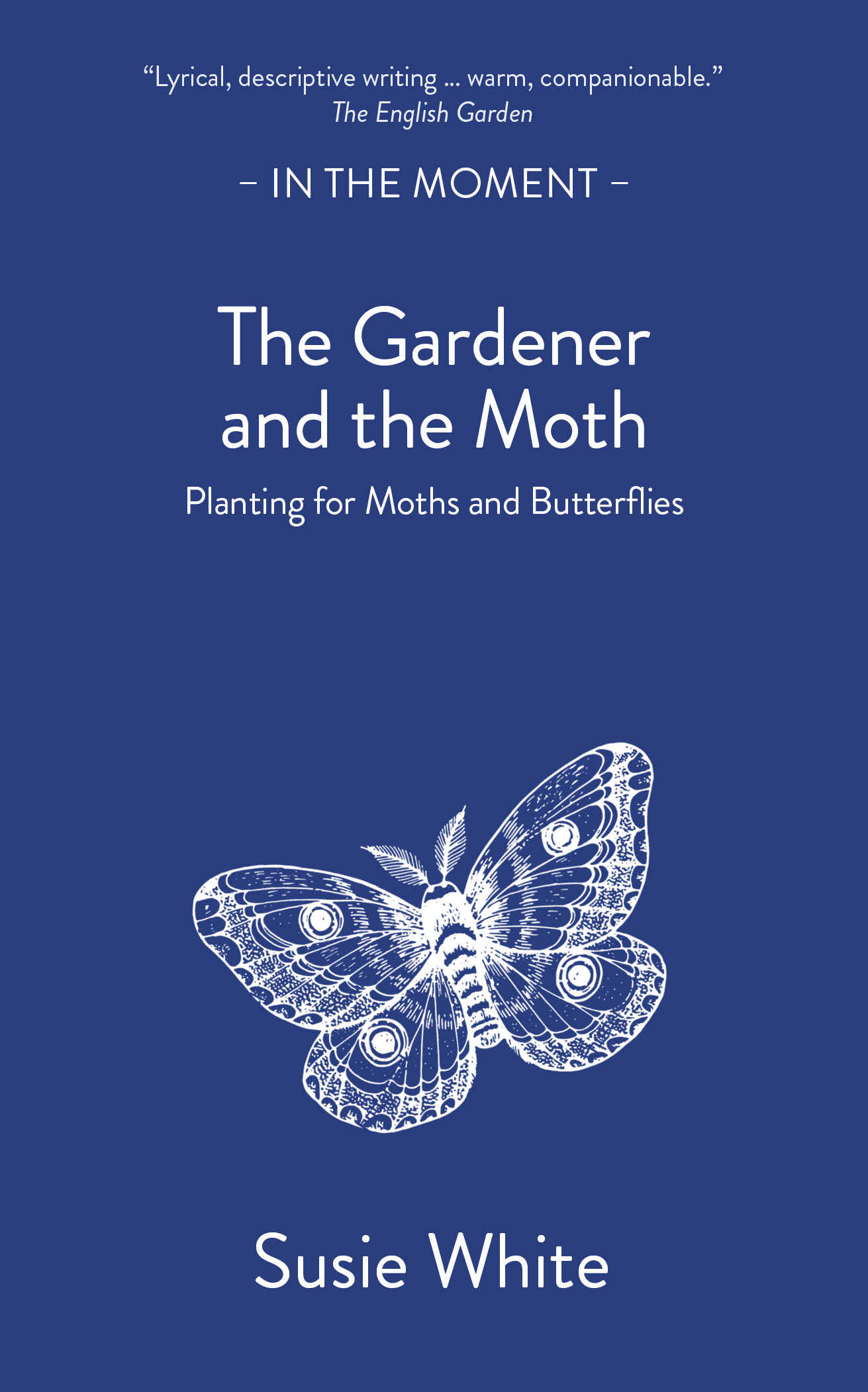
Learn how to create a garden that works both day and night for moths and butterflies, attracting stunning species and helping both flora and fauna to thrive.
Moths are a crucial but forgotten pollinator, often overlooked in favour of their brighter cousin – the butterfly. But, by ignoring moths, we are missing out on gardens that could be filled with more joy, movement and biodiversity. If we could build gardens that pay both pollinators the attention they deserve, we might just be rewarded with healthier, more beautiful ecosystems…
Lifelong gardener and author of Second Nature: The Story of a Naturalist’s Garden, Susie White has spent over a decade constructing a lively, abundant wildlife haven at her Northumberland home. Her garden is a sanctuary for all creatures and values life, variety and growth, of which both moths and butterflies are a crucial part. In this compact volume, she teaches us how to find plants that attract moths and butterflies, how to support these insects through their larval stages, and how to identify and study them.
As with so many insects, numbers of moths and butterflies have declined dramatically in recent years. Actively creating a beautiful garden that welcomes all forms of life is a simple but joyful step to take towards protecting them.

Linda Cracknell
-
Linda Cracknell is a writer of narrative non-fiction on the natural world, as well as of fiction and radio scripts. Her first story collection was nominated for a Saltire Award (now Scotland’s National Book Awards) and the Robin Jenkins Award for environmental writing, and her essay collection Doubling Back: Ten Paths Trodden in Memory, about journeys she took on foot in Scotland, Spain, Switzerland, and Kenya, was serialised for BBC Radio as a Book of the Week. All of Linda’s writing is inspired first and foremost by place, and she teaches creative writing, especially nature and place writing.
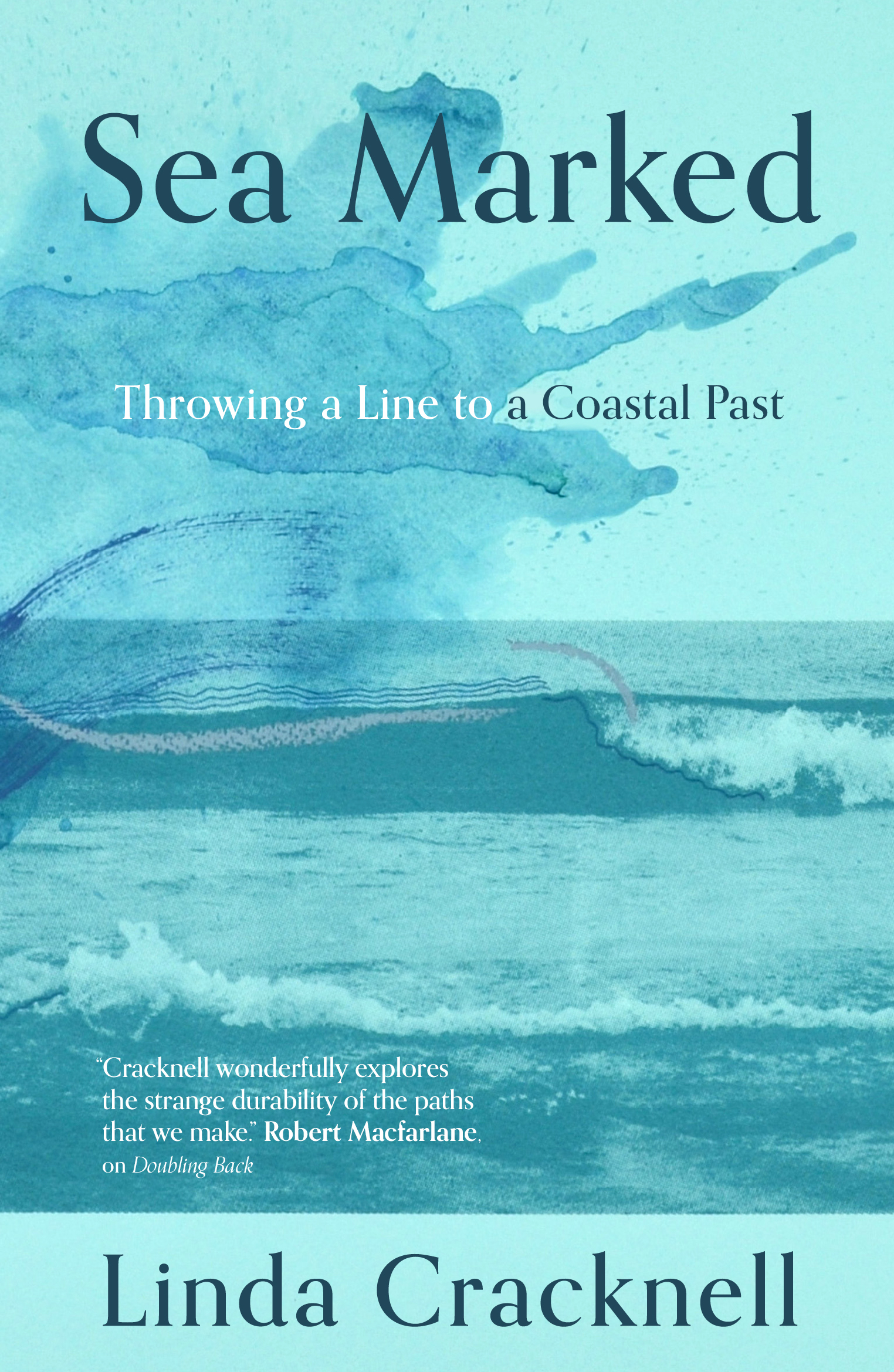
A memoir of place, memory and motion, of seafarers, and the author’s connections to them and to the sea.
Linda Cracknell’s quest to learn more about her seafaring family history brings her to a blustery harbour. As she throws a line to pull in a boat, she is struck by the parallel with her mission to reel the past closer to the present, to find her place in a family tree full of mariners whose lives were defined by the ebb and flow of tides.
Exploring coastlines from Scotland to Cornwall by boat and foot, she retraces the footsteps and paths of her ancestors across marshes, clifftops and waves. She travels in a 121-year-old sailboat and helps to build a community rowing boat. Gradually, she understands that the women in this story were the linchpins of the coastal communities they lived in – and the undertow of her own identity. All the while, she is untangling her complex relationship with her mother.
What begins as a quest for legacy takes Linda well beyond, as she discovers something more elemental and unconscious in her pull to the sea, imagining her blood as salt-saturated, sea-marked.
