

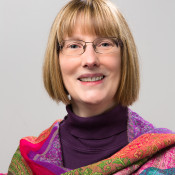
Olga Wojtas
Olga Wojtas is an unconventional – and witty – writer of cosy crime fiction whose surrealist humour has been compared to the likes of P.G. Wodehouse, Jasper Fforde, Blackadder and the Marx Brothers. She was born and brought up in Edinburgh, where she attended James Gillespie’s High School – the model for the Marcia Blaine School for Girls (in Muriel Spark’s The Prime of Miss Jean Brodie). Olga won a Scottish Book Trust New Writers Award in 2014, and has amassed an impressive following for the Miss Blaine’s Prefect series, as well as several award nominations. A journalist for more than 30 years, Olga was Scottish editor of the Times Higher Education Supplement before she began adding creative writing to her portfolio.
Miss Blaine’s Prefect and the Gondola of Doom
by Olga Wojtas



-
Fifty-something Edinburgh librarian Shona is a proud former pupil of the Marcia Blaine School for Girls, but has a deep loathing for The Prime of Miss Jean Brodie, which she thinks gives her alma mater a bad name. Impeccably educated and an accomplished linguist, mathematician, martial artist, and musician, Shona is selected by Marcia Blaine herself to travel back in time for a crucial mission in Venice.
Finding the city afflicted by what appears to be a new outbreak of the plague, Shona soon encounters the Cornetto family of gondoliers. Lately, a number of their passengers have met a watery fate. Coincidence? Unlikely. She dons a mask, goes undercover and seeks inspiration in the library.
But the mystery only deepens. Why do the Cornettos seem so flaky and their explanations wafer-thin, even as they proclaim their innocence? What is going on at the printworks? Shona’s powers of deduction, dissection and prowess as a swimmer are put to the test as she realises that a bitter feud is at play.
Can Shona unravel the tapestry of lies and get to the truth? It’s a race against time, but it would be a mistake to underestimate a librarian.


Jim Crumley
Jim Crumley is the author of more than forty books, mostly on the wildlife and wild landscape of his native Scotland, many of them making the case for species reintroductions, or ‘rewilding’. His Seasons series, a quartet of books exploring the wildlife and landscapes and how climate change is affecting our environment across the four seasons, is highly acclaimed. The Nature of Autumn was longlisted for the Wainwright Golden Beer Book Prize 2017 and shortlisted for the Richard Jefferies Society and White Horse Bookshop Literary Prize 2017. The third in the series, The Nature of Spring, was Radio 4’s Book of the Week. The Nature of Summer, was shortlisted for the 2021 Highland Book Prize. The Eagle’s Way was shortlisted for a prestigious Saltire Society award, and his Encounters in the Wild series – which sees Jim get up close and personal with Britain’s favourite animals – has found him many new readers. He has written about the return of the beaver to the UK’s wetlands in Nature’s Architect, and his most recent title is Lakeland Wild, his first to focus entirely on an English landscape. Lakeland Wild was longlisted for the 2022 Lakeland Book of the Year prize. Jim is also a poet, an occasional broadcaster on both radio and television and a widely published journalist who wrote columns for the Dundee Courier for many years and has a monthly column in The Scots Magazine.
The Seasons quartet is now available in one handsome hardback edition, Seasons of Storm and Wonder.
Watching Wildlife
by Jim Crumley
-
“If you have been still enough for long enough, your eyes will have attuned and begun to read the sea-surge fluently, so you recognize the blunt curve and flourished tail of a diving otter. Home your eyes in on that portion of the sea, permit nothing else to move, and you will see the otter eel-catching, resurfacing.”
It is a special privilege and a richly rewarding experience to observe a wild animal hunting, interacting with its young or its mate, exploring its habitat, or escaping a predator.
To watch wildlife, it’s essential not only to learn an animal’s ways, the times and places you may find it, but also to look inward: to station yourself, focus, and wait. The experience depends on your stillness, silence, and full attention, watching and listening with minimal movement and if possible staying downwind so that your presence is not sensed.
With decades of close observation of wild animals and birds, Jim Crumley has found himself up close and personal with many of our most elusive creatures, studying their movements, noting details, and offering intimate insights into their extraordinary lives. Here, he draws us into his magical world, showing how we can learn to watch wildlife well, and what doing so can mean for our ability to care for it, and care for ourselves.
- This book is part of the IN THE MOMENT collection of books exploring themes of mindfulness and being present in our activities and environment. The first six, out now or forthcoming soon, are pictured here.
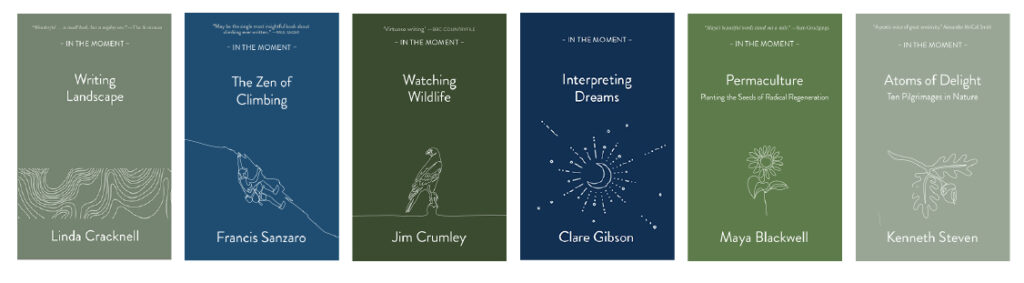
- This book is part of the IN THE MOMENT collection of books exploring themes of mindfulness and being present in our activities and environment. The first six, out now or forthcoming soon, are pictured here.

Clare Gibson
Clare Gibson is a writer and historian specialising in art history and how to interpret symbols, especially in art, antiquities and architectural details.
Her previous works include The Hidden Life of Ancient Egypt (2009), The Hidden Life of Renaissance Art (2007), The Hidden Life of Art (2006), Symbols of the Goddess: Universal Signs of the Divine Female (1997, 2005), Sacred Symbols: A Guide to the Timeless Icons of Faith and Worship (1997), and Signs and Symbols: A Guide to their Meaning and Origins (1996), all previously published by Saraband.
Educated in Germany and England, she studied modern and medieval history and worked as an editor before focusing on symbolism and her writing career. She is also well known for her Twitter feed as @MrsSymbols and her popular blog, Seeing Symbols.
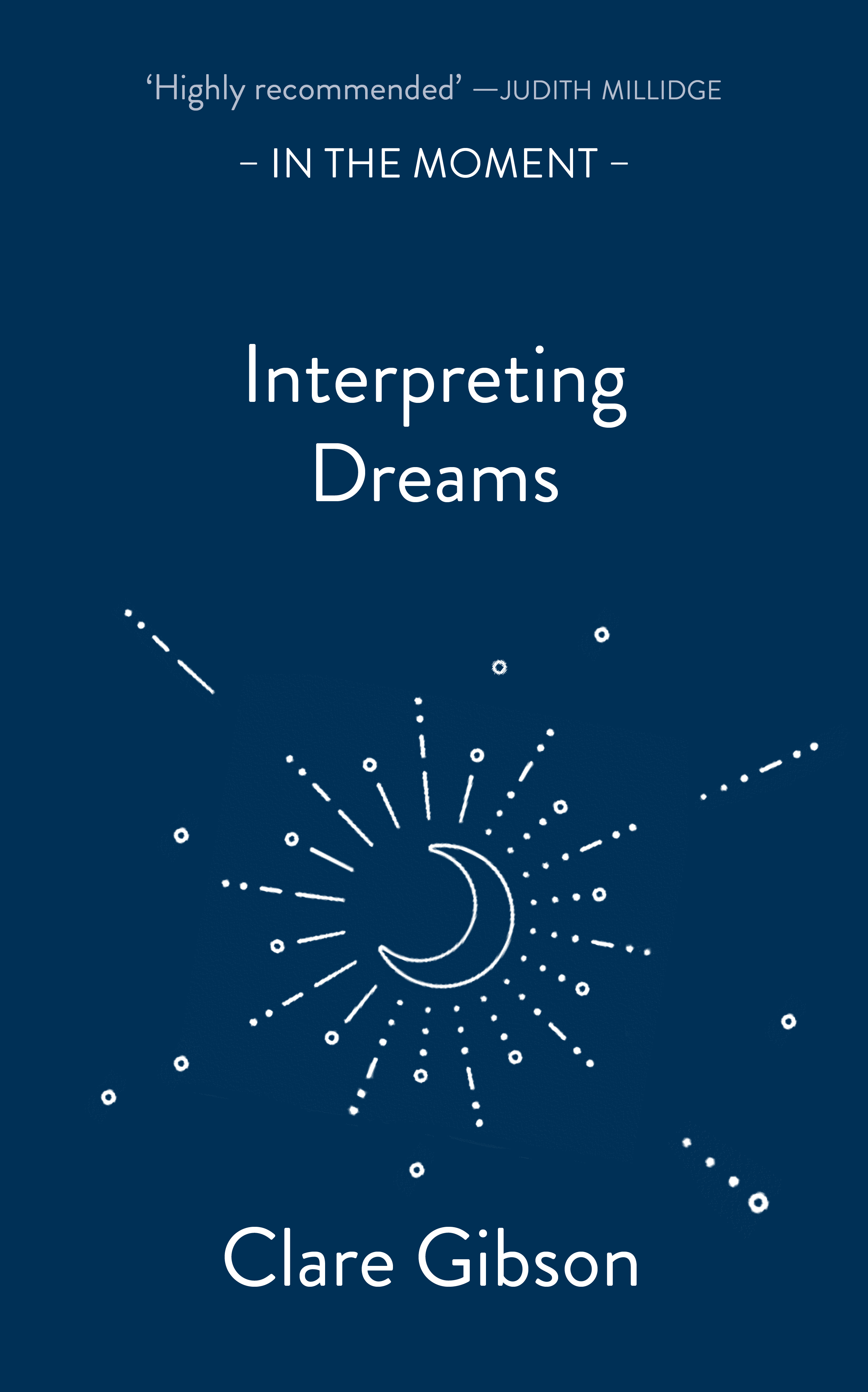
Interpreting Dreams
by Clare Gibson
-
Do you sometimes wake from dreaming with an unease you find difficult to shake? Is there one recurring nightmare that haunts you? Or do dreams bring you welcome relief from your waking life?
We spend around a third of our lives asleep, so it’s understandable that dreams have been intriguing and troubling humans for millennia. Some believe our dreams to be an expression of hidden desires, a cathartic release for our unconscious mind, or even crucial insights or predictions we can’t access while awake. Whatever their functions, our dreams are worth paying attention to. Yet with the demands and diversions of each day, it can be hard to find time to reflect on them.
This compact volume approaches dreaming with a mindful eye, asking us to spend time reflecting on our dreams to help us decipher their secrets and discover what our nighttime unconscious could reveal about our daily lives, needs and desires.
Interpreting Dreams is both an invitation to pay more attention to our dreams, and a toolkit for unlocking their hidden meanings. By bringing awareness to the time we spend dreaming, we can learn to become more present and fulfilled in our daily lives, and perhaps even alleviate some of our most persistent anxieties.
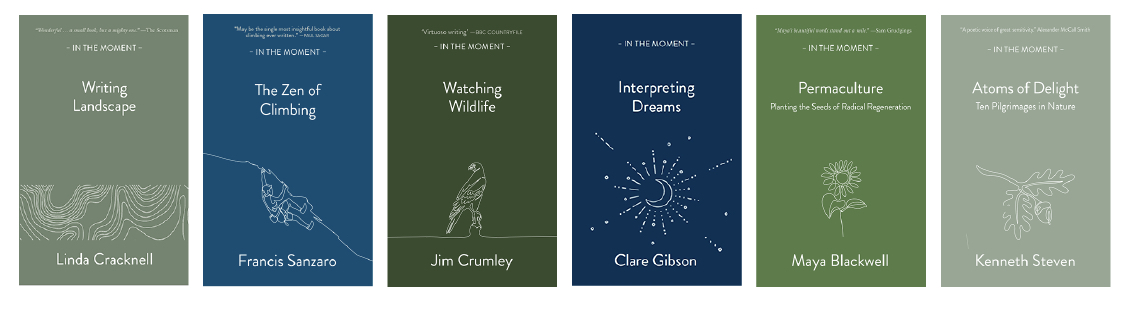
- This book is part of the IN THE MOMENT collection of books exploring themes of mindfulness and being present in our activities and environment. The first six, out now or forthcoming soon, are pictured here.
- This book is part of the IN THE MOMENT collection of books exploring themes of mindfulness and being present in our activities and environment. The first six, out now or forthcoming soon, are pictured here.
REVIEWS OF Interpreting Dreams
“A very comprehensive and easy-to-read volume … wonderfully arranged … mesmerizing. Highly recommended.” Joshua J Mark, World History Encyclopedia
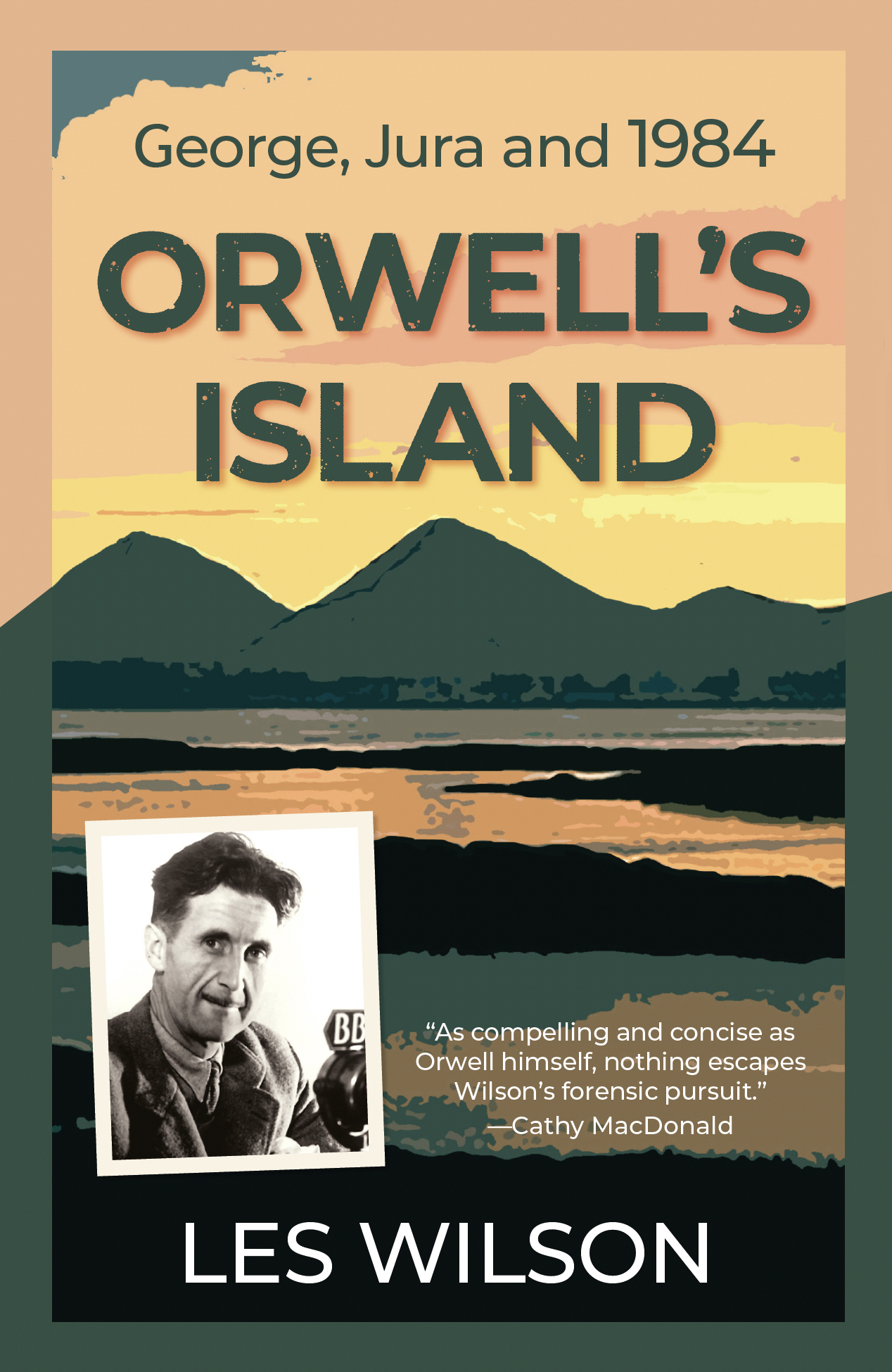

Les Wilson
A former political journalist, Les Wilson is Creative Director of Caledonia TV, directing and executive producing documentaries on Scottish history, the British monarchy (Scotland’s War, The Enchanted Glass), and many programmes in the Scottish Gaelic language on literature and arts. He is co-author (with Seona Robertson) of Scotland’s War and has a novel and several history books to his name: Islay Voices, The Drowned and the Saved: How War Came to the Hebrides (winner of Scotland’s National Book Awards, history) and Putting the Tea in Britain: How Scots Invented our National Drink.
Revered across the globe as an author of compelling novels, journalism and essays that came to define the twentieth century, George Orwell was an unmatched political visionary, shining a light on the insidious nature of propaganda. Yet this chronicler of war, social injustices and urban poverty spent his later years living in a rustic and remote farmhouse, miles from the nearest neighbour. His rural escape was on the Hebridean island of Jura – another paradox, given that he harboured a deep-seated prejudice against Scotland for much of his life.
In 1946, Orwell arrived at his isolated home of Barnhill as a grieving widower living in the shadow of war and the nuclear threat. It was there he wrote his masterpiece, Nineteen Eighty-Four. Beyond the writing desk, he was transformed: his new life was one of natural beauty and tight-knit community – and he grew to love a corner of the world he had once dismissed.
Orwell’s Island casts important new light on a great modern thinker and author. No previous biography has revealed so much about Orwell’s later years or his time on Jura, despite this being where he created Big Brother, the Thought Police and Room 101—creations still in common currency today.
REVIEWS OF Orwell’s Island
“An elegant and persuasive book.” –Allan Massie, The Scotsman
“As compelling and concise as Orwell himself, nothing escapes Wilson’s forensic pursuit. I felt as though I was a mere couple of steps behind the man… a dutiful and beautiful homage to one of our most enduring writers.” –Cathy Macdonald
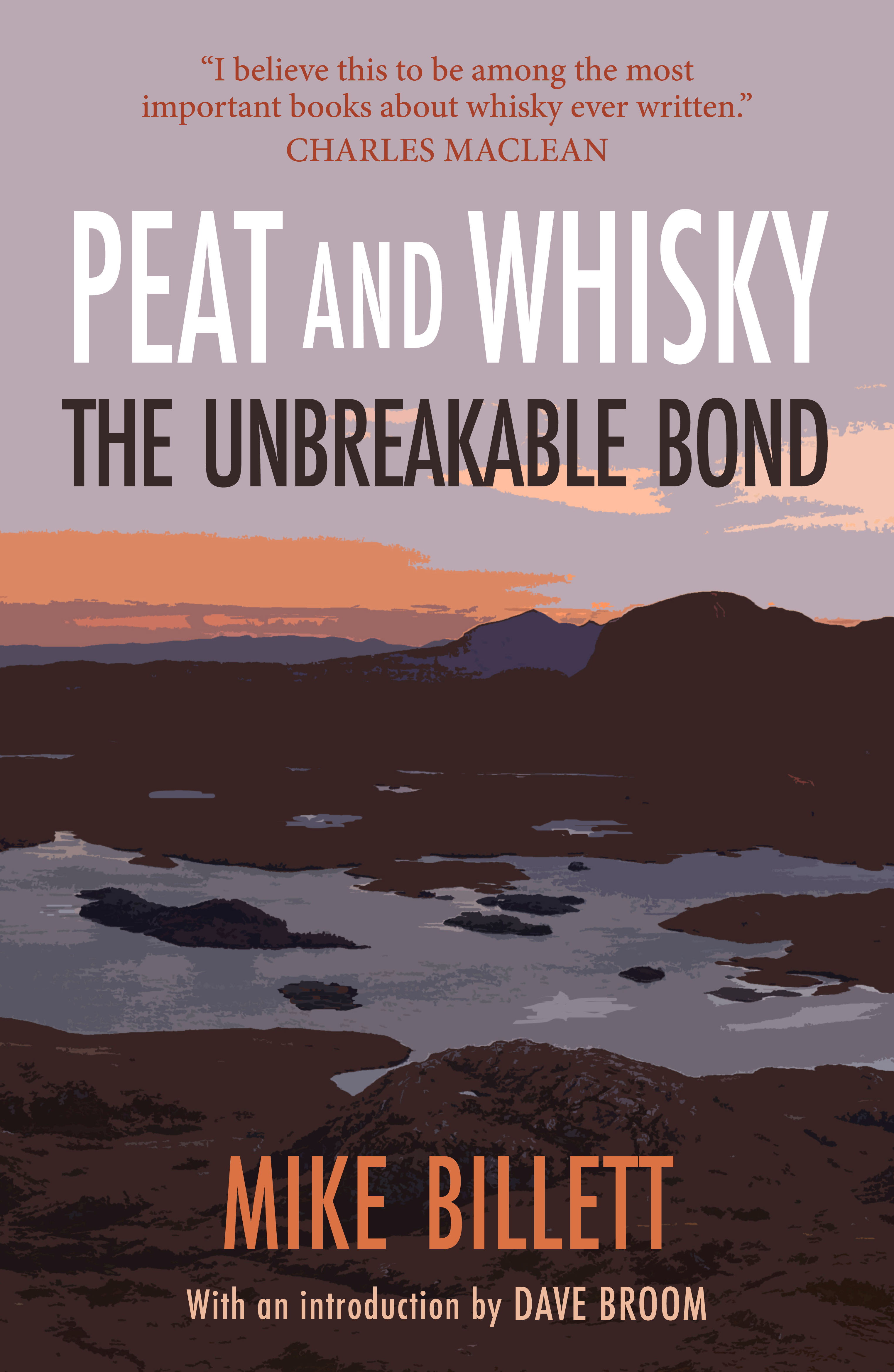

Mike Billett
As well as being a whisky connoisseur, Mike Billett is a leading peatland scientist with a background in geology, soil and water science. During his 40-year career in research and education – at the Universities of Edinburgh and Stirling and at the UK Centre for Ecology and Hydrology – he researched and wrote extensively on the peatlands of the British Isles, Scandinavia and the Arctic, focusing on water quality, carbon, peatland management and environmental change, writing many research papers, book chapters, reports, and articles. In recent years he has immersed himself in the landscapes, taste and qualities of Scotland’s single malt whiskies and has applied his deep understanding of the science of peatlands to this passion. Peat and Whisky is his first non-academic book.
Peat and Whisky: The Unbreakable Bond
by Mike Billett
Peat and Whisky: The Unbreakable Bond is, as one of the best-known aficionados attests, “among the most important books about whisky ever written.” Part travelogue, part popular science, and a love letter to Scotland’s most famous artisan product, Mike Billett’s account brings together landscapes, geology, ecology, history, people and their whisky, whilst also addressing an important current environmental issue: peatlands and their role in climate change.
The story of peat and its central role in the production and flavour of whisky is engagingly related through the author’s journey around Scotland and into its past – in ancient peatlands and bogs and the places where whisky has been made for centuries. It sheds light on a country and its history, especially through an oft-misunderstood component of the production of whisky. It looks back to a golden age of peat and whisky, as well as forward to a more challenging future.
As our natural resources and landscapes are increasingly contested, this is the essential read for all whisky lovers.
REVIEWS OF Peat and Whisky: The Unbreakable Bond
“Mike Billett is the perfect person to guide us into peat’s fascinating story … a vitally important and beautifully written book.” Dave Broom
“An inspirational work, wonderfully engaging, educational and thought-provoking … a compelling read for any Scotch whisky enthusiast.” Iain J McAlister, Master Distiller, Glen Scotia, Campbeltown
“A must-read for any whisky fan.” Billy Abbott, The Whisky Exchange
“A timely book, indeed, long overdue.” Brian Townsend, whisky historian
“A unique work … a journey through ancient peatlands … Billett reveals the special relationship peat has had with the Scotch whisky industry … essential reading for anyone with an interest in whisky.” Neil Wilson, whisky historian
“Compelling and entertaining … essential reading for all whisky lovers.” Gavin D Smith, whisky writer
“This is an outstanding contribution to whisky literature, indeed I believe it to be among the most important books about whisky ever written.” Charles MacLean, noted whisky writer and connoisseur

Kirsty Logan
-
Kirsty Logan’s latest book is Now She is Witch (Harvill Secker, 2023), a queer medieval witch revenge quest. Forthcoming is The Unfamiliar (Virago, 2023), a memoir of queer pregnancy and parenthood. She is also the author of two novels, three story collections, two chapbooks, a short memoir, a 10-hour audio play for Audible, and several collaborative projects with musicians and visual artists. Her books have won the Lambda, Polari, Saboteur, Scott and Gavin Wallace awards. Her work has been optioned for TV, adapted for stage, recorded for radio and podcasts, exhibited in galleries and distributed from a vintage Wurlitzer cigarette machine.

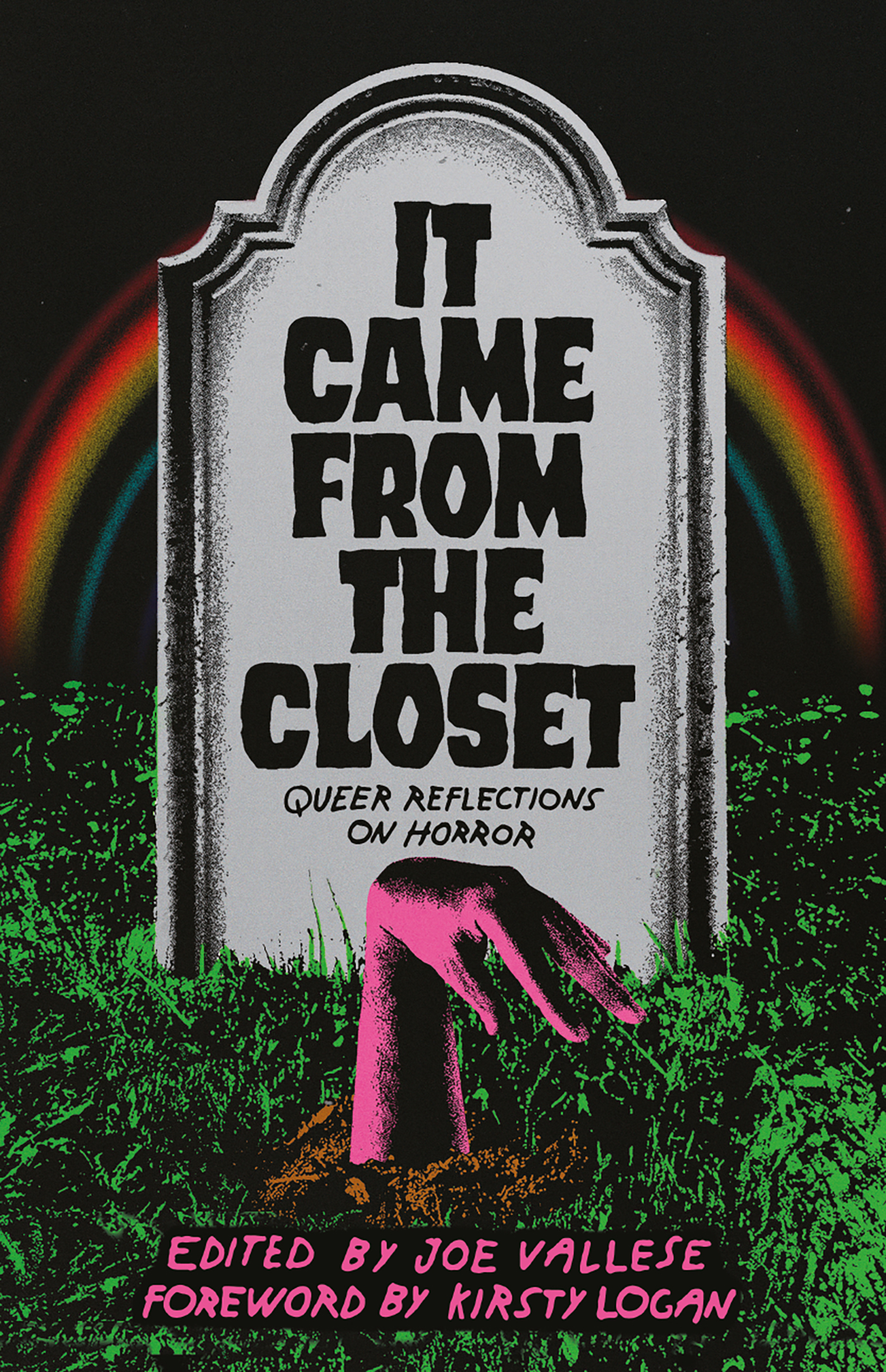
Joe Vallese
-
Joe Vallese is Clinical Associate Professor in the Expository Writing Program at New York University. His creative and pop culture writing appears in Bomb, Vice, Backstage, PopMatters, Southeast Review, and North American Review, among other publications. He has been nominated for a Pushcart Prize and named a Notable in The Best American Essays. He is coeditor of the anthology What’s Your Exit? A Literary Detour Through New Jersey (Word Riot Press). He holds an MFA from NYU, and MAT and BA degrees from Bard College.
“Horror opened me up to new possibilities for survival … I saw power in freakery and transgression and wondered if it could be mine.”
The relationship between horror films and the LGBTQ+ community? It’s complicated. Haunted houses, forbidden desires and the monstrous can have striking resonance for those who’ve been marginalised. But the genre’s murky history of an alarmingly heterosexual male gaze, queer-coded villains and sometimes blatant homophobia, is impossible to overlook. There is tension here, and there are as many queer readings of horror films as there are queer people.
Edited by Joe Vallese, and with contributions by writers including Kirsty Logan and Carmen Maria Machado, the essays in It Came from the Closet bring the particulars of the writers’ own experiences, whether in relation to gender, sexuality, or both, to their unique interpretations of horror films from Jaws to Jennifer’s Body.
Exploring a multitude of queer experiences from first kisses and coming out to transition and parenthood, this is a varied and accessible collection that leans into the fun of horror while taking its cultural impact and reciprocal relationship to the LGBTQ+ community seriously.
Prizes and awards
Kirsty Logan’s essay shortlisted for the Anne Brown Essay Prize, 2023
REVIEWS OF It Came From the Closet
“This is a book which should be read from cover to cover.” –Alistair Braidwood, Snack Magazine
“Manages to strike the balance between in-depth, heartfelt discussions of queer identity and the coming-of-age stories of people across the spectrum with a sense of humour and lightness of touch.” –Chris Haigh, Set the Tape
'In this wonderful and only somewhat disturbing book (the subject is horror, after all), queer and trans writers explore the horror films that have shaped them and most reflected their own experiences. Horror, the anthology argues, while often full of misogyny and anti-trans, homophobic tropes, is also uniquely subversive and queer.' - Shondaland
'A really terrific collection of essays by a great selection and variety of different authors—both fiction authors, poets, and essayists—about the intersection between queer studies and queer identity and horror movies.' - Gothamist
'An impressively diverse array of queer voices contributes their opinions on how and why particular horror movies made a personal and indelible impression on them.' - Bay Area Reporter
'An essential look at how spooky movies so often offer solace through subversiveness.' - Electric Literature
'A critical text on the intersections of film, queer studies, and pop culture.' Booklist (starred review)
'A brilliant display of expert criticism, wry humor, and original thinking. This is full of surprises.' - Publishers Weekly (starred review)
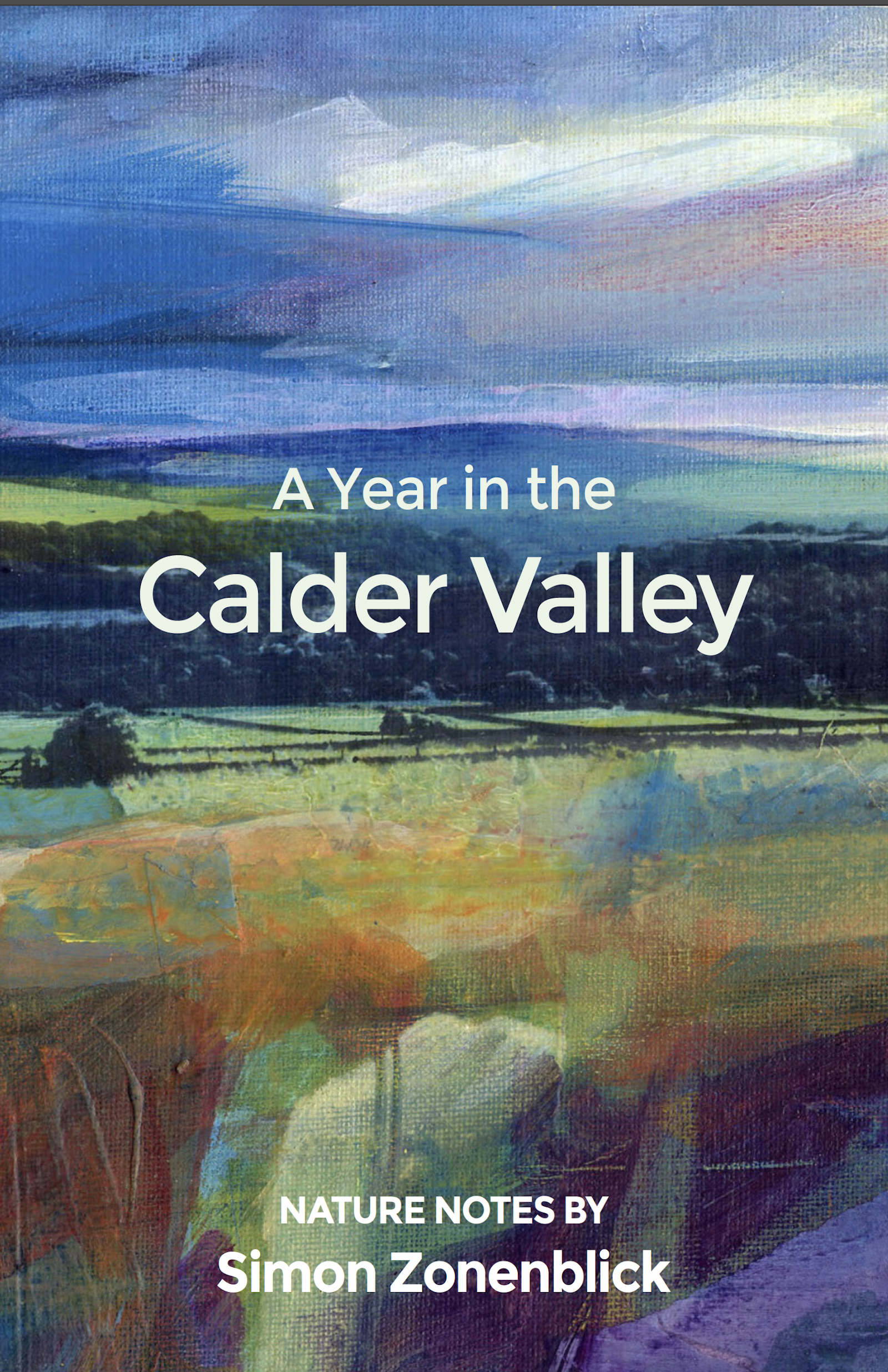

Simon Zonenblick
-
Simon Zonenblick is a poet and nature writer from Sowerby Bridge, in West Yorkshire’s Calder Valley, He has several poetry collections and a film to his name, and contributes nature features to newspapers including the Yorkshire Post.
A Year in the Calder Valley
Rising on Lancashire’s Heald Moor, the River Calder flows through the glorious countryside of West Yorkshire until it joins the River Aire, near Castleford. Its often steep-sided valley was formed by glacial erosion of a bedrock of millstone grit and carboniferous rock, over the course of millions of years. Rich in biodiversity, the valley is home to a wonderful variety of birds, animals, trees and wildflowers. Together they form a beautiful backdrop for residents and visitors to enjoy this green sanctuary, where it’s easy to forget the world beyond.
With more than its fair share of rainfall, the valley’s rushing river was central to the industrial heyday of the Pennines, when the waterway was modified with “cuts” to form a navigable canal. The legacy of the textile industry is seen in the remaining mill and factory buildings. Today, renovated mills are popular as dwellings, and the canal is a place of leisure, where boaters, walkers and cyclists can enjoy nature’s sights and sounds.

Julia Rampen
Julia Rampen is a journalist and writer with a long track record of working with refugees and undocumented migrants. Julia has worked for The New Statesman, the Mirror and the Liverpool Echo, has contributed to the Guardian, BBC Radio 4 Woman’s Hour, BBC Radio 5 Live, and is co-founder of the Syrian storytelling platform Qisetna: Talking Syria.
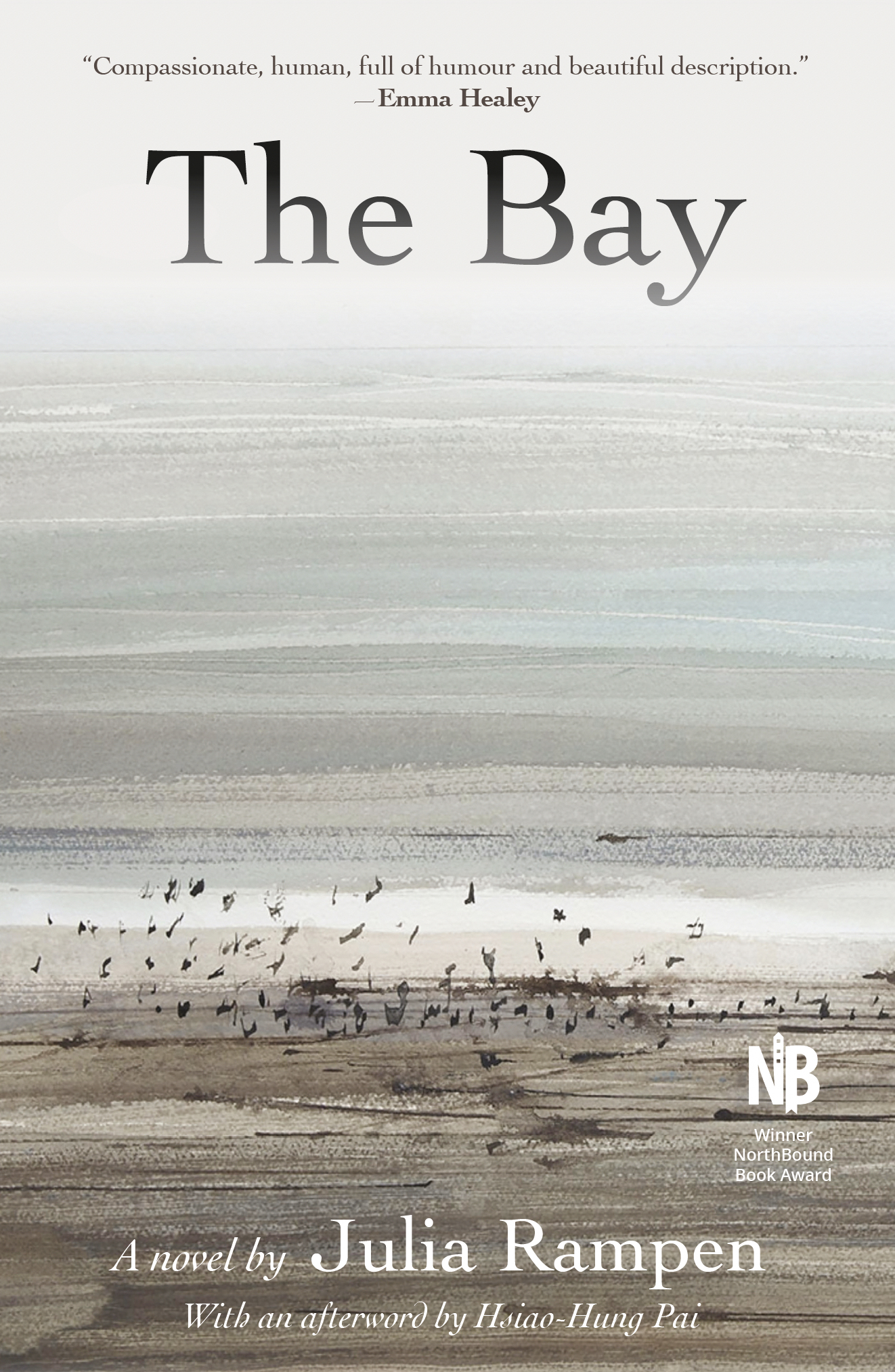
Her novel, The Bay, won the 2022 NorthBound Book Award and was written in consultation with those who investigated the tragedy at the time and told the survivors’ stories.
The Bay
by Julia Rampen
-
Winner of The Gilpin Hotel Prize for Fiction at the 2024 Lakeland Book AwardsIn an old-fashioned fishing community on windswept Morecambe Bay, change is imperceptibly slow. Treacherous tides sweep the quicksands, claiming everything in their path. As a small boy, Arthur had naturally followed in his father’s and grandfather’s footprints, learning to read the currents and shifting sands.Now retired and widowed, though, Arthur feels tired, invisible, redundant. His daughter wants him safely tucked in a home. No one listens to his rants about the ill-prepared newcomers striking out nightly onto the bay for cockles, seemingly oblivious to the danger.When Arthur’s path crosses Suling’s, both are almost out of options. Barely yet an adult, Suling’s hopes for a better life have given way to fear: she’s without papers or money, speaks no English, and debt collectors are hunting her down. Her only choice is to trust the old man.Combining warmth and tension and recalling a true incident, The Bay tells a tender story about loneliness, confronting prejudice, and the comfort of friendship, however unlikely—as well as exposing one of the most pressing social ills of our age.
REVIEWS OF The Bay
“A perceptive, beautifully sculpted and moving novel about the loneliness and difficulty of being an outsider … Rampen writes in clear-eyed yet poetic prose.” Emma Bamford, author of Deep Water
"A cracking tale of lives behind the headlines and what it takes to survive when you’ve lost everything and everyone you know.” The Bath Novel Award
"An important story deftly told in spare, affecting prose." Joanna Barnard, author of Precocious and Hush Little Baby
“A truly remarkable book, with lightning characterisation and such extraordinary compassion. I loved every page.” Kate Simants, author of A Ruined Girl
“Woven through with beautiful stories of common bonds developed and real humanity between the characters, it shows how fragile people’s lives can be … an engrossing, beautifully written debut novel.” Mike Morris, director, Writing on the Wall festival, Liverpool
“Careful and compassionate … compelling and tense … full of humour, and precise and beautiful description.” Emma Healey, author of Elizabeth Is Missing
Karen Lloyd
Karen Lloyd is an award-winning writer of non-fiction and poetry based in Kendal, Cumbria. Her 2022 book, Abundance, was long- listed for the Wainwright Prize for Conservation Writing. Both her debut, The Gathering Tide, and her second book, The Blackbird Diaries, won Lakeland Book Awards and were selected as books of the year, in the Observer and the Birdwatcher’s Handbook. She has contributed to the Guardian, Royal Geographical Society magazine, BBC Wildlife and Countryfile, and she edited and produced Curlew Calling Anthology. Karen gained her PhD from Lancaster University, where she taught on the Creative Writing MA and was writer in residence at the university’s Future Places Centre.
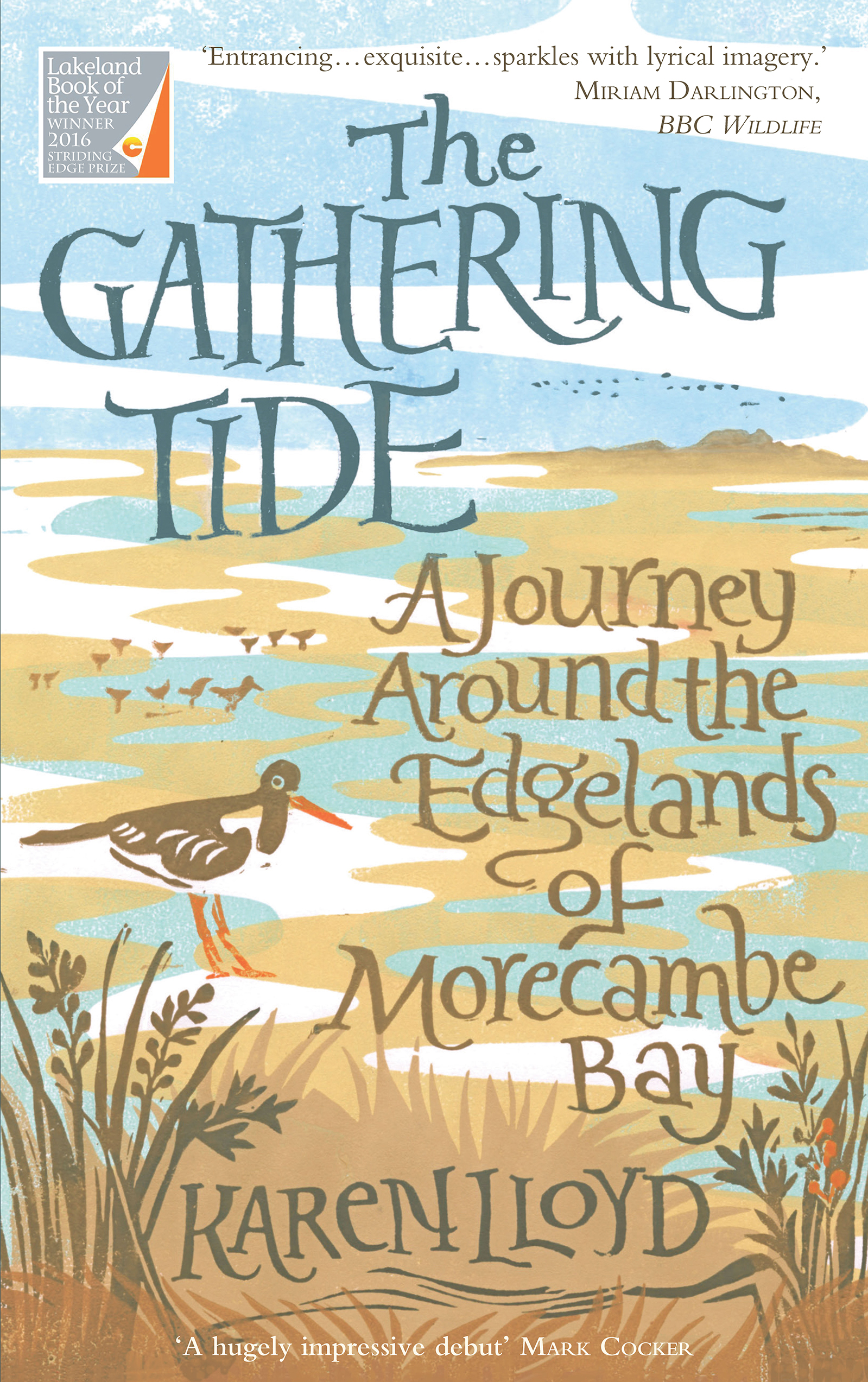
The Gathering Tide
by Karen Lloyd
-
“Evocative, muscular.” – Kathleen Jamie.
Karen Lloyd takes us on a deeply personal journey around the 60 miles of coastline that make up ‘nature’s amphitheatre’.
Embarking on a series of walks that take in beguiling landscapes and ever-changing seascapes, Karen tells the stories of the places, people, wildlife and history of Morecambe Bay. So we meet the King’s Guide to the Sands, discover forgotten caves and islands that don’t exist, and delight in the simple beauty of an oystercatcher winging its way across the ebbing tide.
As we walk with Karen, she explores her own memories of the bay, making an unwitting pilgrimage through her own past and present, as well as that of the bay. The result is a singular and moving account of one of Britain’s most alluring coastal areas.
Prizes and awards
Lakeland Book of the Year 2016, Striding Edge Prize, WINNER
REVIEWS OF The Gathering Tide
“Undeniably beautiful writing … Lloyd’s lyrical prose is smooth, like a pebble softened by the tide… A tribute by a gifted writer to the place she calls home” Caught by the River
“Karen Lloyd's The Gathering Tide creates its own kind of song-line along the edge of one of England's last and richest wilderness areas – Morecambe Bay. The writing in her cycle of stories about humans and nature is full of earthy realism, authentic observation and quiet lyricism. It is a hugely impressive debut.” Mark Cocker, author and naturalist.
“Entrancing … exquisite descriptions … sparkles with lyrical imagery, mapping the history of the shores and sands of this endlessly fascinating bay.” Miriam Darlington for BBC Wildlife


Linda Cracknell
-
Linda Cracknell is a writer of narrative non-fiction on the natural world, as well as of fiction and radio scripts. Her first story collection was nominated for a Saltire Award (now Scotland’s National Book Awards) and the Robin Jenkins Award for environmental writing, and her essay collection Doubling Back: Ten Paths Trodden in Memory, about journeys she took on foot in Scotland, Spain, Switzerland, and Kenya, was serialised for BBC Radio as a Book of the Week. All of Linda’s writing is inspired first and foremost by place, and she teaches creative writing, especially nature and place writing.
Writing Landscape

- Inhabiting a landscape, walking a landscape, writing a place and time…
For Linda Cracknell, exposure to wind, rock, mist, and salt water is integral to her writing process. She follows Susan Sontag’s advice to “Love words, agonise over sentences, and pay attention to the world,” observing and writing her landscapes from the particulars of each moment.
In this varied essay collection, Linda backpacks on a small island that is connected to the mainland only at low tide. In winter snow, she hikes the wooded hillside close to her home, a place she is intimately familiar with in all seasons. And she retraces over three days the steps of a trek made by her parents seven decades earlier. She explores her inspirations, in nature and from other artists and their work, and she offers thoughtful writing prompts.
Reading this collection will take you to new places, open your eyes to the world, and suggest ways to take note and make notes as you go—to inspire your own attentive looking, journaling, and writing practice.
This book is part of the IN THE MOMENT collection of books exploring themes of mindfulness and being present in our activities and environment. The first six, out now or forthcoming soon, are pictured here.
REVIEWS OF Writing Landscape
“A really inspirational read … a book that takes you by the hand and puts your fingers in the sand and soil … a call to meditation.” Alistair Braidwood, Scots Whay Hae
“An object lesson in attentive looking … wonderfully intense … a small book, but a mighty one.” Scotsman
